Introduction
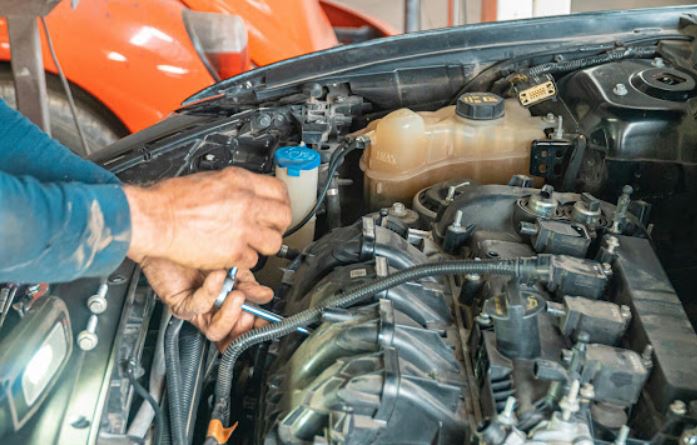
I’d guess that out of every ten cars that roll into my bay with a blown head gasket or a cracked cylinder head, at least six of them share the exact same root cause buried in their maintenance history: nobody ever touched the coolant. Drivers will chase every oil change deadline like clockwork, but coolant gets treated like it’s a “lifetime fluid” that never needs attention. That myth alone has cost some of my customers thousands of dollars in engine repairs that a forty-dollar coolant flush would have prevented entirely. Today I want to walk you through when coolant actually needs to be replaced, why the timing depends on more than just mileage, and what I personally look for when I’m trying to tell a customer whether their cooling system is fine or one hot summer away from disaster.
Why “Lifetime Coolant” Is the Most Dangerous Myth in the Owner’s Manual
A lot of newer vehicles ship with what manufacturers call “long-life” coolant, usually an OAT or HOAT formulation (Organic Acid Technology, a chemical additive package that resists breakdown longer than older green coolants). Marketing around these products often throws around numbers like 100,000 miles or ten years, and drivers latch onto that number as gospel. What doesn’t get explained is that those intervals assume ideal conditions, a properly sealed system, no air intrusion, no cross-contamination from a previous top-off with the wrong coolant type, and consistent operating temperatures.
When I hoist a car up on the lift and pull a sample of “lifetime” coolant that’s six or seven years old, I’m frequently looking at fluid that’s shifted from its original bright orange or pink toward a murky brown, sometimes with tiny black flecks suspended in it. Those flecks matter more than most people realize. That’s usually oxidized metal or degraded additive package settling out of solution, and it tells me the corrosion inhibitors in that coolant have exhausted themselves. Once those inhibitors are gone, the coolant essentially becomes slightly acidic water circulating through aluminum components, and aluminum does not do well against sustained low-grade corrosion.
Many drivers overlook this, but from a mechanic’s perspective, the real critical point isn’t the base interval printed in the manual, it’s the condition of the fluid itself. That’s why I always recommend testing coolant with a refractometer or simple pH test strips rather than blindly trusting a mileage number, especially once a vehicle passes the five-year mark regardless of what the sticker under the hood claims.
What Happens Internally When Coolant Is Neglected Too Long
Coolant does three jobs simultaneously, and drivers usually only think about the first one. It transfers heat away from the engine block, obviously, but it also lubricates the water pump’s internal seal and bearing, and it protects every piece of metal it touches from corrosion, including aluminum heads, cast iron blocks, brass radiator fittings, and rubber hoses. When the corrosion inhibitor package breaks down, all three functions degrade at once, not just one.
The water pump failure pattern is something I see constantly. That internal seal I mentioned relies on coolant with intact lubricating properties to stay pliable. Once the coolant turns acidic and loses its lubricity, that seal starts to wear unevenly, and you’ll hear it before you see it. It’s usually a light, high-pitched whining or chirping noise from the front of the engine that increases in pitch with RPM, not to be confused with a belt squeal, which tends to be more of a sharp shriek on cold startup. If you catch that whining early, you’re looking at a water pump replacement, maybe $300 to $500 depending on the vehicle. Catch it late, after the bearing seizes and the pump either leaks coolant onto a hot exhaust manifold or the impeller physically fails, and you’re now dealing with a potential overheating event that can warp a cylinder head.
What would you do if your temperature gauge crept up ten degrees higher than normal on a hot day, but the car seemed to be running fine otherwise? Most drivers ignore it because the engine isn’t visibly overheating yet. My advice is the opposite: that small, consistent upward shift is exactly the early warning sign worth investigating immediately, because by the time the needle swings into the red zone, you’re often past the point of a cheap fix.
Just last week, a client brought in a Hyundai Elantra with this exact issue, a slightly elevated temperature gauge reading that she’d noticed for about two weeks but assumed was normal for summer driving. When I popped the radiator cap, the coolant looked like weak chocolate milk, and there was a faint but distinct sweet smell, which is a telltale sign of coolant breakdown or a small internal leak. Pressure testing the system showed a slow leak at the water pump weep hole (a small drainage hole designed to let coolant escape externally rather than get pushed past the pump seal into the engine oil, which is actually a good design feature doing its job as a warning sign). We caught it in time for a $420 water pump and coolant flush. Had she waited another month through a heat wave, that seal failure could have escalated into a full overheating event with head gasket damage running well into four figures.
Reading the Signs: How I Judge Coolant Condition on the Lift
Color alone isn’t a perfect diagnostic tool because manufacturers use different base colors, orange, pink, blue, green, and mixing coolant types is actually one of the more common mistakes I see from well-meaning DIYers who just grab whatever jug is cheapest at the auto parts store. Mixing an OAT-based long-life coolant with an old-school IAT (Inorganic Acid Technology) green coolant can cause the additive packages to react poorly, sometimes forming a gel-like sludge that clogs radiator passages. I’ve pulled radiators apart with passages so clogged with this gel that coolant flow was reduced by what I’d estimate was nearly half, which explains why a customer’s car was randomly overheating in stop-and-go traffic but running fine on the highway.
Texture matters just as much as color. Fresh coolant should feel slick between your fingers, almost silky. Degraded coolant often feels slightly gritty, and if you run it through a paper towel, you’ll sometimes see fine sediment left behind, that’s scale and corrosion byproduct that’s been circulating through your radiator, heater core, and engine passages, slowly eroding thin-walled components. The heater core especially concerns me, since it’s essentially a miniature radiator tucked deep in your dashboard, and replacing one due to internal corrosion or clogging is a labor-intensive job that can run $600 to $900 depending on how much of the dashboard has to come apart to reach it.
Here’s a reference table I hand out to customers so they understand not just when to service coolant, but why the interval isn’t one-size-fits-all:
[Mechanic’s Essential Checklist: Coolant Service Guidelines]
| Coolant Type | Typical Interval | Warning Signs to Watch For | Estimated Flush Cost |
|---|---|---|---|
| Conventional Green (IAT) | Every 2 years / 24,000 miles | Rust-colored tint, gritty texture | $80–$120 |
| Extended-Life Orange/Red (OAT) | Every 5 years / 60,000 miles | Brown discoloration, sweet smell | $100–$150 |
| Hybrid HOAT (Yellow/Orange) | Every 5 years / 100,000 miles | Cloudiness, black flecks | $110–$160 |
| Any coolant, high-mileage vehicle | Test annually after 5 years | Elevated temp gauge, whining noise | $100–$150 |
Beyond mileage, driving conditions matter more than most owners assume. Frequent towing, stop-and-go city traffic, or living somewhere with extreme summer heat all accelerate coolant breakdown regardless of what the sticker says, because the system is working harder and cycling through more heat stress than the manufacturer’s ideal test conditions ever accounted for.
The DIY Question: Can You Flush Your Own Coolant Safely?
For a mechanically confident owner, a coolant flush is absolutely doable at home, provided you respect a few non-negotiable safety points. Coolant is toxic to pets and wildlife due to its sweet smell and taste, so any spills need to be cleaned up immediately and old coolant disposed of at a recycling center rather than poured down a drain. You also need to burp the system properly after refilling, meaning you run the engine with the radiator cap off or the bleeder valve open until air pockets work their way out, because a trapped air pocket in the cooling system can cause localized hot spots even when your overall coolant level looks fine.
Back when I was an apprentice mechanic, one of the biggest trial-and-error mistakes I made was refilling a system, buttoning everything up, and sending the car out the door without properly burping it. The customer came back two days later with a car that ran hot specifically at idle but seemed fine at highway speeds, classic symptom of a trapped air pocket sitting right at the thermostat housing. It taught me to always run the engine up to operating temperature with the heater on full blast before final topping off, since the heater core pulls coolant through the entire loop and helps push trapped air out toward the highest point in the system.
Final Verdict
Coolant isn’t a fluid you can set and forget for a decade just because a sticker under your hood says so. The real indicator is the condition of the fluid itself, its color, its smell, its texture, combined with how your vehicle is actually driven. My professional recommendation is simple: get your coolant tested annually once your car passes the five-year mark, regardless of what interval the manufacturer originally quoted, and don’t wait for a rising temperature gauge to take action, because by then you’re often negotiating with a mechanic over a water pump or a head gasket instead of writing a much smaller check for a routine flush.
Leave a Reply