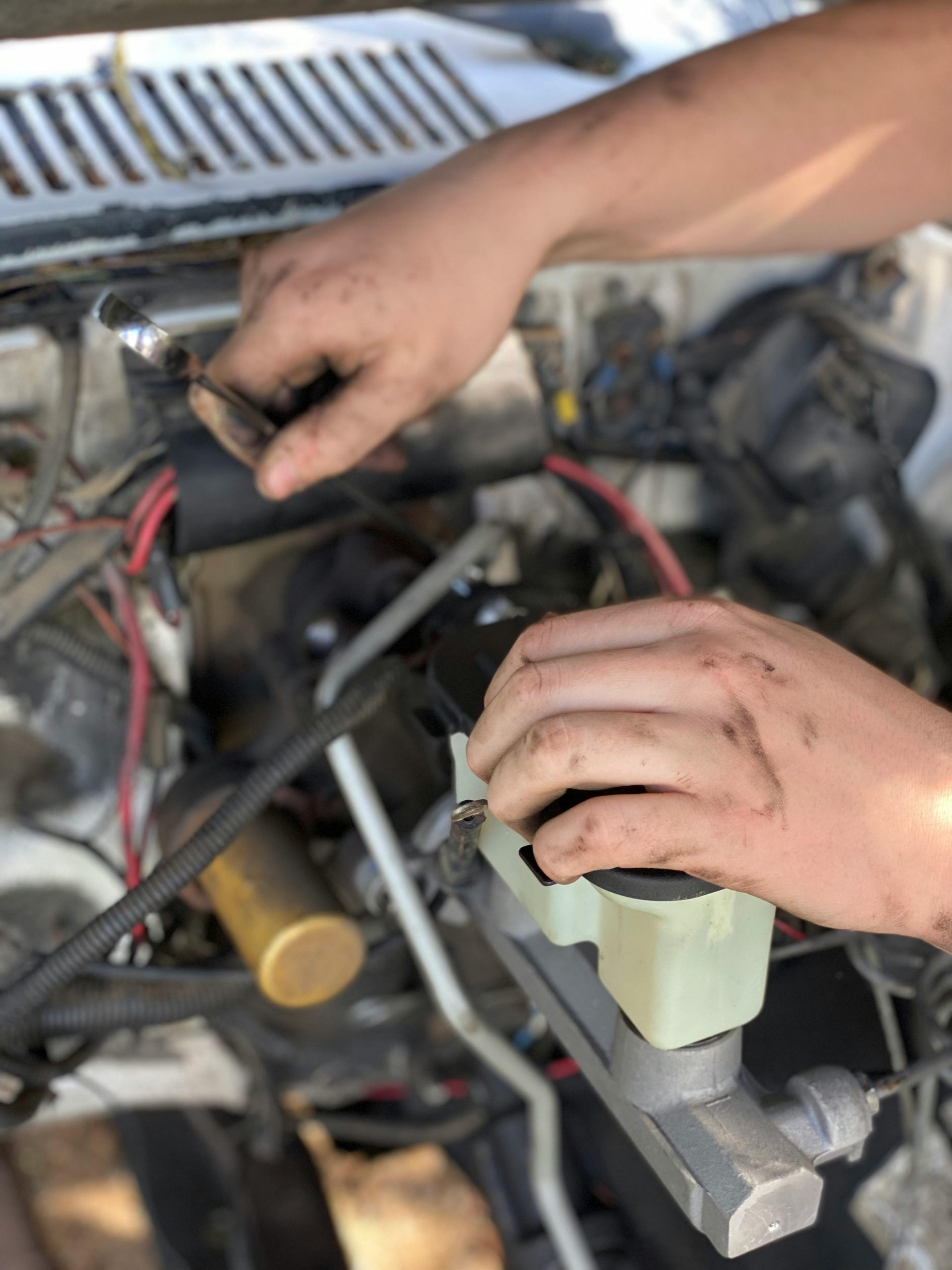
Introduction
Every week, at least two or three cars roll into my shop for a routine oil change, and I ask the same follow-up question: “When was the last time you had your brake fluid flushed?” More often than not, I get a blank stare. Drivers obsess over oil change intervals, they watch their tire tread depth like a hawk, but brake fluid sits quietly in that little reservoir under the hood, completely forgotten until something goes wrong. Here’s the uncomfortable truth I’ve learned after a decade of pulling brake systems apart: brake fluid is arguably the most overlooked maintenance item in the entire vehicle, and neglecting it doesn’t just cost you money down the road, it can genuinely put your life at risk the moment you need your brakes most. Today I want to walk you through exactly why this fluid degrades, what it looks like when it’s gone bad, and why that “optional” flush your service advisor mentioned is actually one of the cheapest insurance policies you can buy for your car.
The Science Nobody Explains: Why Brake Fluid Goes Bad
Most drivers assume that because brake fluid lives in a sealed system, it should last forever. That assumption is wrong, and here’s the mechanical reality behind it. Brake fluid, specifically the common DOT 3 and DOT 4 varieties, is hygroscopic, meaning it actively absorbs moisture from the air over time. This isn’t a flaw in the fluid, it’s actually intentional, because if water pooled in one spot inside your brake lines, it could freeze in cold weather and cause a catastrophic failure. Instead, the fluid is designed to absorb and distribute moisture evenly throughout the system.
The problem is that every time you open the reservoir cap, every time humidity works its way past the rubber seals, and simply through the passage of time, that moisture content climbs. When I hoist a car up on the lift and pull fluid from a system that hasn’t been serviced in five or six years, I’m often looking at something the color of weak coffee, sometimes even darker, almost like used motor oil. Fresh fluid should be a pale straw color, almost like light apple juice. That color change alone tells me the fluid has absorbed moisture and picked up contamination from rubber seals breaking down internally.
Here’s why that moisture content matters so much: brake fluid’s job is to transfer the force from your foot on the pedal into hydraulic pressure that clamps your brake pads against the rotors. Water has a boiling point of 212°F, but your brake system, especially during hard braking or descending a mountain pass, can generate temperatures well above that at the caliper. When moisture-contaminated fluid hits those temperatures, the water content boils and turns into vapor. Unlike fluid, vapor compresses easily. That’s when you get the sensation every mechanic dreads explaining to a customer: a spongy, sinking brake pedal that keeps going toward the floor with no resistance. In extreme cases, on a long downhill grade with brakes riding constantly, this can escalate into what’s called brake fade, where you press the pedal and almost nothing happens.
What I See When I Open Up a Neglected Brake System
Many drivers overlook this, but from a mechanic’s perspective, the real critical point isn’t just about pedal feel, it’s about what’s happening to the metal components bathed in that degraded fluid. Contaminated brake fluid becomes mildly corrosive over time. When I disassemble a caliper on a car that’s never had a fluid flush, I frequently find the caliper pistons pitted with corrosion, sometimes seized partially in their bores. That rough, pitted texture under my fingertip is a dead giveaway that moisture has been sitting against that metal for years. A healthy piston should slide back into its bore smooth as glass. A neglected one drags, catches, and sometimes won’t retract at all, which causes the pad to keep dragging against the rotor even when you’re not braking.
I’ll never forget a Toyota Camry that came in a few years back. The owner complained about a burning smell after highway driving and said her car pulled slightly to the left under braking. When I got it on the lift and pulled the front-left caliper, the piston was so corroded it had essentially frozen in a partially extended position. That pad had been dragging for who knows how long, overheating the rotor to the point where it had developed heat spots, those bluish discoloration rings you sometimes see on badly abused rotors. What should have been a $120 fluid flush turned into a $650 repair involving two calipers, pads, and rotors. That’s the story I tell every customer who waves off a fluid flush as unnecessary.
Master cylinders suffer the same fate internally. The rubber seals inside rely on clean fluid to stay pliable and to lubricate properly as they move. Once moisture and grit accumulate, those seals harden and start to leak internally, which is why some older cars develop a pedal that slowly sinks to the floor if you hold steady pressure at a stoplight. That’s not something a quick visual inspection catches, but it’s exactly what a fluid boiling point test or a simple test strip can flag before it becomes a full master cylinder replacement.
How to Actually Check Your Brake Fluid (And What Those Numbers Mean)
You don’t need a shop to get a rough sense of your fluid’s condition. Most auto parts stores sell brake fluid test strips for under ten dollars, and they work similarly to pool test strips, you dip them in the reservoir and match the color change against a chart that estimates moisture content by percentage. As a general guideline, fresh DOT 3 fluid has a dry boiling point around 401°F, but once moisture content creeps up toward 3-4%, that effective boiling point can drop by over 100 degrees. That’s the difference between a brake system that shrugs off a mountain descent and one that fades halfway down.
What would you do if your brake pedal suddenly felt softer than usual after a long trip down a steep grade? A lot of drivers just pump the pedal and assume it’s normal, but that spongy feeling under sustained heat is often the first physical symptom of moisture-saturated fluid starting to boil. My advice is simple: if you notice pedal softness that wasn’t there before, especially after towing, mountain driving, or repeated hard stops, get the fluid checked immediately rather than waiting for your next scheduled service.
Here’s a breakdown I give customers so they understand where brake fluid service fits into the broader maintenance picture:
[Mechanic’s Component Replacement Schedule & Cost Comparison]
| Component | Recommended Interval | Average Cost (Parts + Labor) | Consequence of Neglect |
|---|---|---|---|
| Brake fluid flush | Every 2 years or 30,000 miles | $100–$150 | Corroded calipers, spongy pedal, reduced stopping power |
| Brake pads | Every 30,000–50,000 miles | $150–$300 per axle | Rotor damage, reduced braking performance |
| Brake rotors | Every 50,000–70,000 miles | $250–$450 per axle | Vibration, extended stopping distance |
| Caliper (if seized) | As needed, reactive | $300–$600 per caliper | Uneven pad wear, pulling, overheating |
| Master cylinder | As needed, typically 100,000+ miles | $400–$700 | Pedal sinks to floor, complete brake loss risk |
Looking at that table, the fluid flush is by far the cheapest line item, yet it’s the one that prevents nearly every expensive failure listed below it. That’s not a coincidence, it’s the entire point of hydraulic system maintenance.
The DIY Reality Check: What You Can and Can’t Do Yourself
I’m a big believer in empowering drivers to handle basic maintenance themselves, and a brake fluid flush is technically within reach for a confident DIYer with the right tools, a vacuum bleeder or a simple two-person pump-and-hold method, fresh fluid matched to your manufacturer’s spec, and a way to safely dispose of the old fluid, since it’s toxic and shouldn’t go down a drain. That said, back when I was an apprentice mechanic, one of the biggest trial-and-error mistakes I made was bleeding a system out of sequence. Brake systems need to be bled in a specific order, typically starting with the wheel farthest from the master cylinder and working toward the closest one, because doing it out of order can trap air pockets that never fully work their way out. I spent an embarrassing amount of time chasing a soft pedal on a Honda Civic before my supervisor pointed out I’d bled the wheels backward. It’s a small detail, but it makes or breaks the entire job.
If you’re not comfortable bleeding a hydraulic system, this is genuinely one of those jobs worth paying a shop for. Air in the lines isn’t just annoying, it directly reduces your stopping power, so getting it wrong isn’t a minor inconvenience, it’s a safety issue.
Final Verdict and What You Should Do This Week
If there’s one maintenance item I’d tell every driver to stop ignoring, it’s brake fluid. It’s inexpensive, it’s fast to service, and it directly protects the one system in your car you absolutely cannot afford to have fail. Don’t wait for a spongy pedal or a burning smell to take action, by that point you’re often already looking at caliper or master cylinder damage rather than a simple fluid swap.
This week, pop the hood, locate your brake fluid reservoir, usually a translucent container near the back of the engine bay on the driver’s side, and take a look at the color. If it’s dark, cloudy, or you honestly can’t remember the last time it was changed, get it tested or flushed before your next long drive. Your brakes are the one component in your car with zero margin for error, and a $120 flush today is a lot cheaper than the alternative I see far too often on my lift.
Leave a Reply