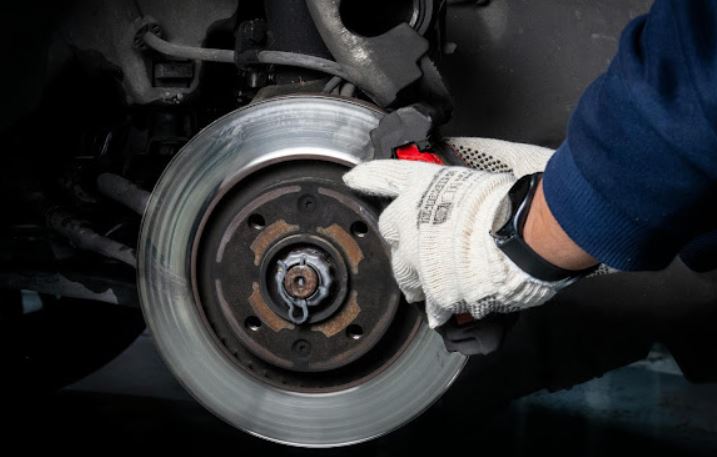
I get this complaint at least once a week, usually from a customer holding up their phone with a screenshot from a Facebook group or a text from a friend. “My coworker only paid $120 for his brake pads, why did mine cost $340?” And look, I get the frustration, nobody likes feeling like they got overcharged. But here’s the thing, in probably eight out of ten of these conversations, the two brake jobs being compared aren’t actually the same job at all. They just both get called “brake pads” in casual conversation. Let me walk you through exactly where that price gap comes from, because once you understand it, you’ll be able to look at any quote and know whether it’s fair or whether you’re being taken advantage of.
Not All Brake Pads Are Created Equal, And The Material Difference Is Real
The single biggest factor I see driving price differences is pad material, and this is something most drivers have genuinely never been taught about. Semi-metallic pads, which contain metal fibers blended with fillers, are typically the cheapest option, and they’re what a lot of quick-lube chains default to because the parts cost is low. Ceramic pads, on the other hand, use a denser compound with copper or other fibers embedded in a ceramic matrix, and they cost noticeably more per set, sometimes double the price of semi-metallic.
Many drivers overlook this, but from a mechanic’s perspective, the real critical point is that this price difference isn’t a scam, it reflects genuinely different performance characteristics. Ceramic pads produce far less brake dust, which means cleaner wheels, they run quieter, and they tend to be gentler on your rotors over the life of the pad. When I hoist a car up on the lift and pull a rotor that’s been paired with cheap semi-metallic pads for 60,000 miles, I typically see more scoring and a rougher surface texture compared to a rotor that’s been running ceramic pads for the same mileage. That’s not marketing talk, that’s just what I physically feel when I run my finger across the rotor face during inspection.
So if your neighbor got semi-metallic pads for $120 and you got ceramic for $220, you didn’t get ripped off, you paid for a different product. Always ask your shop specifically what pad material is quoted before comparing prices with anyone else.
The Hidden Line Items That Turn A Simple Job Into A Bigger One
Here’s where things get more complicated, and where I think shops sometimes fail to properly explain what’s happening. A basic pad-only replacement assumes your rotors are still within spec, meaning they’re smooth and haven’t worn below the minimum thickness stamped right on the rotor edge or hub. But that’s frequently not the case by the time a customer actually brings the car in.
Just last week, a client brought in a Hyundai Elantra expecting a standard pad swap based on a quote she’d gotten over the phone. Once I actually got the wheel off and measured her rotor thickness with a micrometer, they were already below minimum spec, thin enough that resurfacing wasn’t even an option anymore, they legally and safely needed replacement. That added roughly $180 to her original quote for two rotors plus labor. She was frustrated at first, understandably, but I showed her the micrometer reading against the minimum thickness spec stamped on the rotor itself, and once she saw it in person, she understood this wasn’t upselling, it was a genuine safety requirement.
This happens constantly with phone quotes, and honestly it’s one of my biggest pet peeves in this industry. A shop can’t accurately quote you a rotor job over the phone without physically measuring your rotors first. Any shop that gives you a rock-bottom guaranteed price before ever looking at your car is either going to lowball you and hit you with surprise charges later, or they’re going to skip a rotor that genuinely needed replacing just to keep the price where they promised.
What would you do if a shop told you your rotors “should be fine” without ever measuring them?
Honestly, I’d ask them directly what the measured thickness was and how it compares to the minimum spec. A rotor that’s warped or below minimum thickness can genuinely extend your stopping distance, this isn’t a nice-to-have upsell, it’s a real safety issue. If a shop can’t give you a specific number, that’s a red flag worth paying attention to.
Beyond rotors, other common additions include caliper slide pin service, which I mentioned is often skipped by lower-cost shops. Back when I was an apprentice mechanic, one of the biggest trial-and-error mistakes I made early on was rushing through pad jobs without properly cleaning and regreasing those slide pins, because it felt like an unnecessary extra step when the customer just wanted brakes done fast and cheap. I learned the hard way when a few of those cars came back within months with uneven pad wear or a caliper that had seized entirely, which is a far more expensive repair than the five extra minutes it takes to service those pins properly the first time. Now I never skip it, and if you’re comparing quotes, ask specifically whether slide pin service and caliper inspection are included, because that’s often exactly where the price gap between a $120 quote and a $200 quote comes from.
[Brake Job Price Comparison: What’s Actually Included]
| Service Level | Typical Price Range (Per Axle) | What’s Actually Included |
|---|---|---|
| Bargain quick-lube pad swap | $100–$140 | Semi-metallic pads only, no slide pin service, no rotor inspection detail |
| Standard shop pad replacement | $150–$220 | Ceramic or semi-metallic pads, slide pin cleaning/greasing, visual rotor check |
| Pads plus rotor resurfacing | $220–$300 | New pads, rotors machined smooth if within spec, full caliper inspection |
| Pads plus new rotors | $350–$450 | New pads and new rotors, full caliper and hardware inspection, brake fluid check |
| Pads, rotors, plus caliper replacement | $500–$700+ | Full corner rebuild, typically needed if caliper piston is seized or leaking |
Labor Rates And Regional Pricing Actually Do Matter Too
I also want to be honest about something shops don’t always explain clearly, which is that labor rates genuinely vary by region and by shop overhead. A dealership in a major metro area might charge $150 to $180 an hour for labor, while an independent shop in a smaller town might charge $90 to $110. That difference alone, even with identical parts, can create a $60 to $100 gap in your final bill for the same exact job. Dealerships also sometimes use OEM (Original Equipment Manufacturer, meaning parts made by or for your car’s specific brand rather than a generic aftermarket alternative) pads and rotors exclusively, which cost more than quality aftermarket alternatives that perform nearly identically for most daily drivers.
None of this means the higher price is automatically the better deal, or that the lower price is automatically a scam. It just means comparing two brake job prices without knowing the pad brand, whether rotors were replaced or resurfaced, whether hardware was serviced, and what the local labor rate is genuinely doesn’t tell you very much at all.
My Final Verdict And What You Should Actually Ask For Next Time
The next time you get a brake quote, or the next time you want to compare your bill against a friend’s, don’t just compare the total dollar figure. Ask your shop three specific questions: what pad material are they using, were the rotors measured and are they being resurfaced or replaced, and is slide pin and caliper hardware service included in that price. Once you have those three answers, you can genuinely compare apples to apples instead of feeling anxious that you got overcharged for a job that, in reality, may have simply included more thorough and safer work than the cheaper option down the street.
If you’re currently sitting on a quote and unsure whether it’s fair, ask the shop to show you the measured rotor thickness against the minimum spec stamped on the part itself. Any shop confident in their work will show you that number without hesitation, and that single request will tell you more about whether you’re getting a fair deal than any price comparison with a coworker ever could.
Leave a Reply