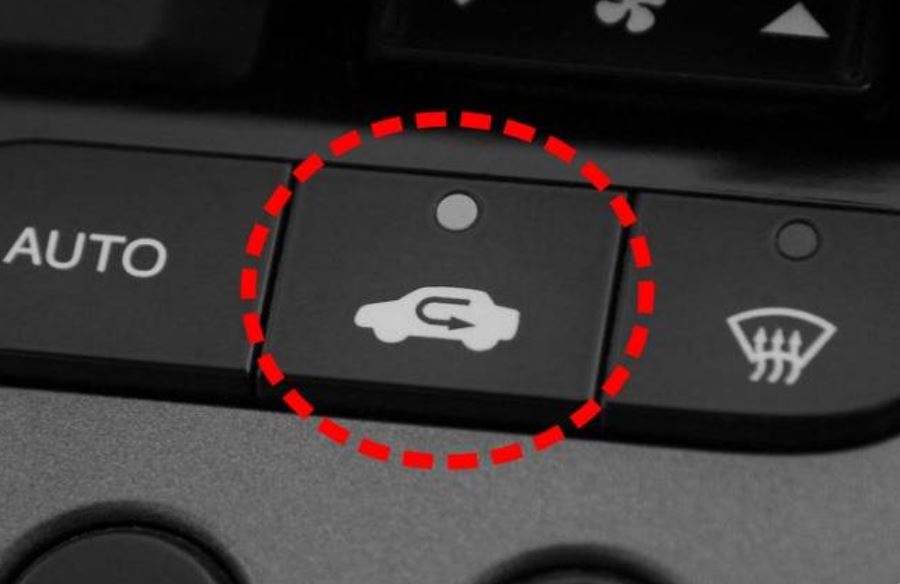
Every single week, I get a customer standing in my bay pointing at that little button with the curved arrow going in a loop — the one right next to the A/C control — asking me if it’s broken. Nine times out of ten, it’s not broken at all. It’s just misunderstood. That button controls whether your car pulls air from outside the cabin (fresh air intake) or recirculates the air already inside your cabin (recirculation mode), and how you use it — or don’t use it — has a bigger impact on your cooling performance, your fuel economy, your windshield fogging, and even your health than almost any other control on your dashboard. I’ve seen customers blast their A/C on max cold for twenty minutes in fresh air mode wondering why the car never feels arctic inside, and I’ve seen the opposite too — folks who leave it locked in recirculation mode for months at a time and then wonder why their windshield fogs up every time it rains or why there’s a musty smell hitting them every morning. Let’s actually break down what this button is doing mechanically, because once you understand the airflow path, you’ll never second-guess it again.
What’s Actually Happening Behind That Dashboard Vent
Here’s the part most drivers never think about: your HVAC system has a flap — technically called the intake air door or recirculation door — sitting inside the housing behind your glovebox or under the cowl at the base of your windshield. When you’re in fresh air mode, that door opens a passage that pulls in outside air through the cowl intake, runs it across the evaporator core (the component that actually cools and dehumidifies the air, sort of like a mini radiator but for cold), and pushes it into the cabin. When you hit recirculation, that door swings shut on the outside passage and instead opens a path that just pulls cabin air back through the system in a closed loop.
When I hoist a car up on the lift and pull the glovebox to inspect the blend door actuator (the small motor that physically moves these flaps), what I usually find on higher-mileage vehicles is a worn linkage or a clicking actuator gear — and that’s precisely why some cars get “stuck” in one mode. If your recirculation button doesn’t seem to do anything anymore, don’t assume it’s electrical before you’ve had someone physically check that door. I’ve had customers pay for a full diagnostic scan for what turned out to be a five-dollar broken plastic linkage clip behind the dash.
Many drivers overlook this, but from a mechanic’s perspective, the real critical point is this: recirculation mode doesn’t make your A/C colder because it’s magic — it makes your A/C feel colder faster because it’s not fighting hot outside air every few seconds. Fresh air mode is constantly feeding your evaporator core new, often hot and humid, outside air that has to be cooled from scratch. Recirculation mode is just cycling air that’s already been cooled once, so your compressor doesn’t have to work nearly as hard to maintain that temperature. This is why, on a hot July afternoon, flipping to recirculation can drop your cabin temp several degrees faster than leaving it on fresh air.
The Fogging Problem Nobody Connects to This Button
What would you do if your windshield started fogging up every single time you drove in the rain, even with the defrost blasting? Most drivers immediately assume their defroster is broken or their cabin air filter is clogged, and while those are worth checking, the very first thing I check on the lift is whether recirculation mode has been left on. Here’s why that matters: recirculation traps moisture. Every time you and your passengers breathe, talk, or just exist in that cabin, you’re adding humidity to the air. In fresh air mode, that humid air gets constantly diluted and pushed back out. In recirculation mode, it just keeps building up, condensing on your windshield the moment the glass temperature and interior humidity hit that dew point.
Just last week, a client brought in a Hyundai Elantra with exactly this complaint — her windshield was fogging so badly on her morning commute that she said she genuinely felt unsafe driving. She’d already assumed her defrost system needed a repair and was bracing for a big bill. I checked her HVAC controls first before touching anything under the hood, and sure enough, her recirculation button had been engaged for what she said was “probably months” because she liked how cold it kept the car. I walked her through switching to fresh air mode specifically for defrost situations, and she called me two days later just to say the fogging had completely disappeared. No parts, no labor, no charge. That’s the kind of fix that builds trust with a customer for life, and it’s a perfect example of why understanding this button saves real money.
Cabin Air Filters, Mold, and the Smell Test
This is the part that genuinely concerns me as a mechanic, more than fuel economy or fogging: air quality. Your cabin air filter (a pleated paper or synthetic filter, usually located behind the glovebox, that filters dust, pollen, and particulates from the air entering your cabin) works overtime when you’re constantly running fresh air mode, since it’s filtering new outside air nonstop. But if you run recirculation mode constantly and never let fresh air cycle through, moisture tends to sit stagnant in the evaporator housing and ductwork, which creates an ideal breeding ground for mold and mildew. That musty smell some drivers describe when they first start the car and hit the A/C button — that’s usually biological growth on the evaporator core itself, not the cabin filter.
Back when I was an apprentice mechanic, one of the biggest trial-and-error mistakes I made was recommending a full evaporator core replacement to a customer complaining about persistent odor, when the actual fix was far simpler and far cheaper. My senior tech at the time showed me a trick that’s now standard practice in my shop: run the A/C on fresh air mode with the compressor off for the last five minutes of any drive. This lets airflow dry out the evaporator core naturally instead of leaving it damp and sealed shut in a dark, humid housing overnight. It sounds almost too simple, but that habit alone prevents the vast majority of the mold-related odor complaints I used to see constantly.
[Mechanic’s Essential Checklist: Recirculation vs. Fresh Air]
| Situation | Recommended Mode | Why |
|---|---|---|
| Hot day, trying to cool cabin fast | Recirculation | Cools already-conditioned air, less strain on compressor |
| Rainy or humid weather, windshield fogging | Fresh Air | Prevents moisture buildup and clears condensation |
| Stuck in traffic behind exhaust/diesel trucks | Recirculation | Blocks outside pollutants and exhaust fumes from entering cabin |
| Long highway drive, normal weather | Fresh Air | Maintains air quality and reduces stale, oxygen-depleted air |
| Last 5 minutes before parking | Fresh Air (A/C off) | Dries evaporator core, prevents mold and musty odor |
| Noticing a musty smell on startup | Fresh Air + inspect cabin filter | Likely microbial growth on evaporator core |
Fuel Economy: The Small Detail That Actually Adds Up
Here’s something that surprises a lot of my customers, especially the ones who drive longer commutes. Since recirculation mode reduces how hard your A/C compressor has to work to maintain a set temperature, it also reduces the load on your engine, because the A/C compressor is belt-driven or, in some newer electric-compressor vehicles, drawing directly off the battery system. On a hot day, running fresh air mode nonstop can mean your compressor is cycling on more frequently and running longer each cycle just to keep up with unconditioned incoming air. It’s not going to be a dramatic difference on your fuel bill, but over the course of a summer of daily driving, especially in stop-and-go traffic, it’s a measurable one. I usually tell customers: think of recirculation as A/C efficiency mode, and fresh air as air quality mode, and toggle between the two based on which one you need more in that moment rather than picking one and forgetting about it entirely.
[Component Replacement Schedule & Realistic Cost Estimates]
| Component | Typical Replacement Interval | Realistic Cost Range (Parts + Labor) |
|---|---|---|
| Cabin air filter | Every 12,000–15,000 miles | $30–$60 |
| Recirculation door actuator | As needed, no fixed interval | $120–$280 |
| Evaporator core (if mold/damage severe) | Rarely, only if neglected long-term | $700–$1,200 |
| Blend door linkage/clip repair | As needed, no fixed interval | $20–$90 |
If a shop ever quotes you over a thousand dollars for a “clicking noise” from your dash vents without first inspecting the actuator and linkage themselves, that’s worth a second opinion. I’ve seen shops jump straight to quoting a full blend door motor replacement when the real issue was a $15 broken plastic gear tooth. A fair, honest diagnostic should always start with the cheapest, most likely culprit before jumping to the most expensive one.
My Final Verdict as Your Mechanic
If there’s one habit I want every driver reading this to walk away with, it’s this: stop treating that recirculation button as a “set it and forget it” switch. Use recirculation when you need fast, efficient cooling or when you’re trying to keep outside fumes and pollutants out of your cabin. Switch back to fresh air mode during humid weather, on longer drives, and always for the last few minutes before you park, so your system has a chance to dry out naturally. Get in the habit of replacing your cabin air filter on schedule, and if you ever smell something musty or notice your windshield fogging more than it used to, don’t jump to conclusions about expensive repairs — check the simple things first. This is one of those rare cases in car maintenance where the fix costs you nothing but a little awareness, and yet it affects your comfort, your safety, and the air you and your family are breathing every single time you get behind the wheel.
Leave a Reply