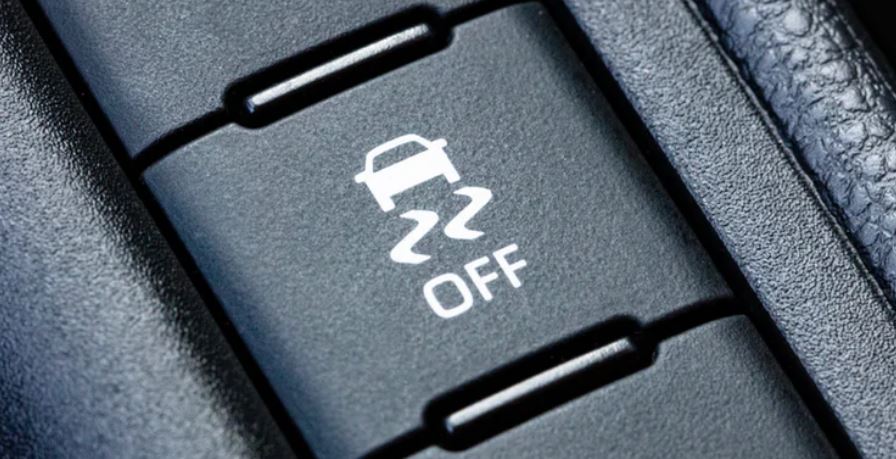
There’s a specific kind of panic I see on a customer’s face when they glance down at the dash and spot a little icon of a car with two squiggly skid lines lit up, sometimes paired with a message that just says “TCS OFF” or “Traction Control Off.” Most people have no idea what it actually means, only that it looks urgent, and they immediately assume something catastrophic is happening under the hood. In reality, your Traction Control System, or TCS, is one of the quieter guardian angels of modern driving, working constantly in the background without you ever noticing it — until the day it either kicks in aggressively on an icy on-ramp, or worse, disables itself entirely and leaves you wondering if it’s safe to keep driving. I want to walk you through exactly what this system does mechanically, what it feels like when it’s working correctly, and the specific warning signs that tell me, as a mechanic, whether you’re dealing with a false alarm or something that needs to get looked at before your next drive.
How TCS Actually Decides When to Step In
Traction control works hand-in-hand with your Anti-lock Braking System (ABS), sharing the same wheel speed sensors mounted at each hub. These sensors constantly measure how fast each individual wheel is spinning, dozens of times per second, and feed that data to the same control module. Under normal acceleration, all four wheels should be spinning at roughly proportional speeds relative to your steering angle. The moment one wheel — say, your front-left on a patch of ice — starts spinning noticeably faster than the others because it’s lost grip, the module recognizes that as wheel slip, and it intervenes almost instantly.
What most drivers don’t realize is that TCS doesn’t just cut engine power. In my experience, it’s actually a layered response. First, the system will pulse the brake on that specific slipping wheel, using the same hydraulic modulator that ABS uses, to slow it back down to match the other wheels. If that alone doesn’t solve the slip, the module will communicate with the engine control unit and actually retard ignition timing or reduce throttle input, which is why you sometimes feel a slight hesitation or stumble in acceleration when TCS engages hard. That flashing dash light with the skidding car icon you see during this moment isn’t a malfunction warning — it’s actually confirming the system is doing its job.
Many drivers overlook this, but from a mechanic’s perspective, the real critical point is understanding the difference between TCS flashing briefly during a slip event, which is completely normal and expected, versus a solid “TCS OFF” indicator staying lit constantly, which tells you the system has disabled itself due to a detected fault. Those are two completely different situations, and confusing them is one of the most common reasons customers either panic unnecessarily or, worse, ignore a real problem because “the light does that sometimes anyway.”
Why the System Sometimes Shuts Itself Off Completely
When I hoist a car up on the lift because a customer’s TCS light stayed on constantly, the first thing I check isn’t the traction control module at all — it’s the wheel speed sensors and their tone rings (the small toothed metal rings mounted on the wheel hub or axle that the sensor reads to calculate rotational speed). These sensors live in a brutal environment, constantly exposed to road salt, brake dust, and moisture, and they fail more often than people expect, typically somewhere in the 80,000 to 120,000 mile range, though I’ve seen them go earlier on vehicles that see a lot of winter road salt exposure.
Here’s a diagnostic detail that only comes from experience: a fully dead wheel speed sensor usually throws a fairly obvious, consistent fault code. But a sensor that’s failing intermittently — often due to corrosion buildup on the connector pins or a wiring harness that’s been rubbed thin from years of suspension movement — will cause the TCS and ABS lights to flicker on and off unpredictably, sometimes only in cold weather when the wiring contracts slightly, or only when you hit a bump that jostles a loose connection. That inconsistency is actually a useful diagnostic clue in itself, and it’s why I always tell customers not to just clear the code and send the car back out without a physical inspection of the sensor and harness.
Just last week, a client brought in a Honda Civic with an intermittent TCS OFF light that had been driving her crazy for nearly two months. Three different shops before mine had scanned it, found a wheel speed sensor code, cleared it, and sent her on her way, and each time the light came back within a week or two. When I actually got under the car and physically wiggled the harness near the rear passenger wheel speed sensor while watching live data on my scan tool, I caught the signal dropping out completely for a split second. It wasn’t the sensor at all — it was a section of the wiring harness that had been slowly abraded by a suspension component rubbing against it every time the car hit a bump, until the copper strands inside were barely making contact. A fifteen-dollar section of wire and about forty minutes of labor fixed a problem that three previous visits couldn’t diagnose because nobody bothered to physically inspect the harness under real-world movement instead of just reading a code.
What It Feels Like When TCS Is Struggling (And When to Worry)
What would you do if you felt your car’s dashboard light flicker and the engine briefly stumble every time you pulled out of a wet parking lot, even at low speeds where slipping shouldn’t really be an issue? This is actually one of the more common complaints I get, and it usually points to one of two things. Either your tires have worn evenly but are simply past their useful tread life and losing grip more easily than they should, or, more concerning, one specific tire has slightly different circumference than the others due to uneven wear or incorrect tire size, which confuses the wheel speed sensors into thinking there’s slip happening when there really isn’t.
I always tell customers to check their tread depth using the simple penny test (insert a penny with Lincoln’s head down into the tread groove; if you can see the top of his head, your tread is worn below a safe depth) before assuming there’s an electrical fault. Back when I was an apprentice mechanic, one of the biggest trial-and-error mistakes I made was spending nearly two hours chasing a TCS fault code on a pickup truck, convinced it was a sensor issue, before my shop foreman walked by, glanced at the tires, and pointed out that the front tires were a completely different brand and tread pattern than the rears from a previous owner’s mismatched replacement. The slightly different rolling diameter was enough to trigger false slip readings constantly. That lesson stuck with me for a decade: always rule out the simple, cheap explanation before assuming the expensive one.
[Mechanic’s Essential Checklist: TCS Warning Light Diagnosis]
| Symptom | Likely Cause | Urgency Level |
|---|---|---|
| Light flashes briefly during acceleration on wet/icy roads | Normal system operation | None — system working correctly |
| “TCS OFF” light stays solid constantly | Wheel speed sensor fault or wiring issue | Moderate — schedule diagnostic soon |
| TCS light flickers only in cold weather | Corroded sensor connector or harness contraction | Moderate — inspect before winter |
| TCS engages harshly on dry, normal roads | Mismatched tire sizes or uneven tread wear | Moderate — check tires first |
| TCS and ABS lights on together with stiff brake pedal | Possible hydraulic modulator issue | High — avoid highway driving until inspected |
| TCS off light on with no other symptoms after a battery disconnect | Sensor recalibration needed | Low — often self-resolves after a drive cycle |
The Cost Reality: What’s Fair and What’s Not
This is where I see a lot of drivers get taken advantage of, so let me give you realistic numbers. A single wheel speed sensor replacement, parts and labor combined, should typically run somewhere between $150 and $350 depending on your vehicle and whether the sensor is integrated into the wheel bearing hub assembly, which is common on many newer vehicles and drives the cost toward the higher end of that range. If a shop quotes you over $600 for a single sensor without mentioning a hub assembly replacement, that’s worth questioning. Wiring harness repairs, like the one I did on that Civic, should realistically cost between $80 and $200 depending on accessibility, and if a shop jumps straight to recommending a full traction control module replacement, which can run well over $800, without first testing the sensors and wiring, I’d strongly encourage getting a second opinion before authorizing that work.
[Realistic Repair Cost Comparison]
| Repair | Realistic Cost Range | Notes |
|---|---|---|
| Wheel speed sensor (standalone) | $150–$350 | Higher end if bundled with wheel bearing |
| Wiring harness section repair | $80–$200 | Depends on location accessibility |
| Tone ring replacement | $100–$250 | Often requires axle or hub removal |
| Traction control module | $600–$900+ | Should be a last resort after ruling out sensors/wiring |
| Diagnostic fee (should be credited toward repair) | $80–$150 | Ask if this applies to your final bill |
My Final Verdict as Your Mechanic
If you ever see that TCS light flash briefly while accelerating in the rain or on a gravel shoulder, don’t panic — that’s your car doing exactly what it was designed to do. But if that light stays on solid, or if you notice the system engaging harshly on completely dry, normal roads, don’t just let it sit for months hoping it resolves itself. Start with the cheap, obvious checks first: look at your tread depth, confirm all four tires actually match in size and brand, and only then move toward sensor and wiring diagnostics. And if a shop quotes you a four-figure repair before they’ve physically inspected your wheel speed sensors and harnesses under real movement, get a second opinion, because in my experience, the real culprit is almost always something far simpler and far cheaper than the worst-case scenario a rushed diagnosis might suggest.
Leave a Reply