I had a customer walk in a few months back holding a cracked wheel he’d pulled off his own car after hitting a pothole on a construction detour, asking me whether he’d just gotten unlucky or whether he’d bought the wrong wheels for his car in the first place. That’s a question I get more than you’d expect, especially from people who bought aftermarket wheels purely because they looked good on a website, without anyone explaining what they were actually made of and why that matters once the wheel meets a real road with real potholes, real winters, and real curbs.
Most articles treat this as a simple aesthetics-versus-price debate. It’s not. The material your wheel is made from changes how your car handles, how it responds in a collision with debris or a curb, how much unsprung weight your suspension has to manage, and even how your brakes perform under hard stops. Let me walk you through this the way I would if you were standing next to me in the shop with a wheel off the car.
The Actual Metallurgical Difference and Why It Changes Everything
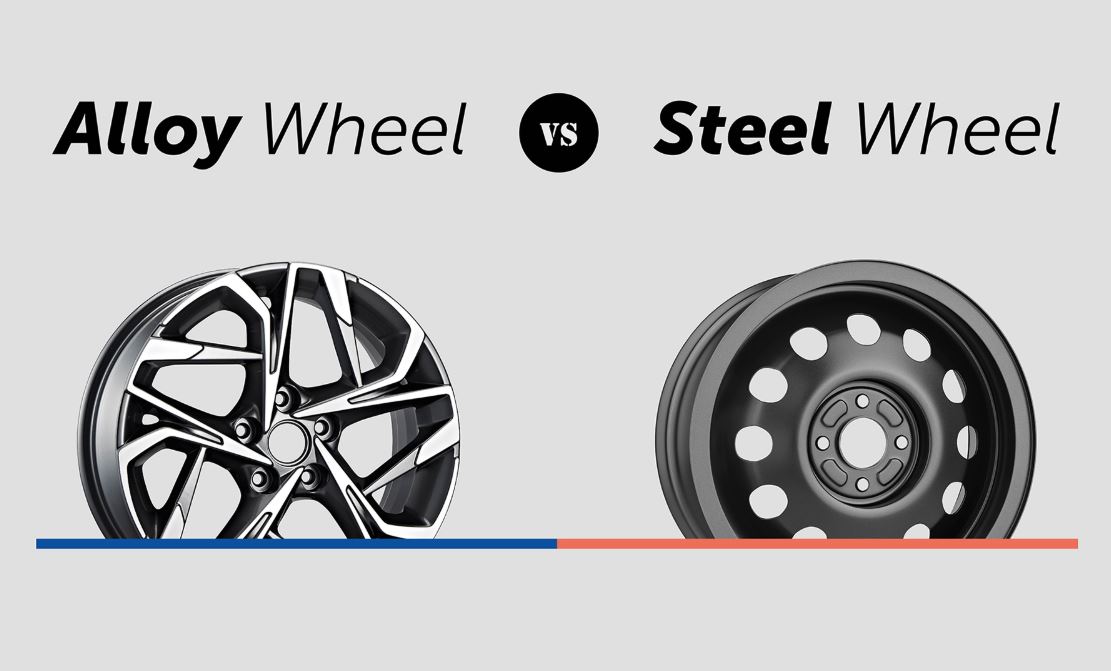
Steel wheels are stamped and welded from sheet steel, typically in two pieces — the wheel disc and the wheel barrel — joined together, then usually covered with a plastic hubcap for appearance. Alloy wheels, on the other hand, are cast or forged from a mixture of aluminum with small amounts of other metals like nickel or magnesium (this is what “alloy” actually refers to — a blended metal composition designed to balance strength and weight, rather than a single pure element).
When I hoist a car up on the lift and pull a steel wheel off, the first thing you notice is the weight difference in your hands — it’s substantial, often four to six pounds heavier per wheel compared to a similarly sized alloy wheel. That doesn’t sound like much until you understand what that weight actually is: it’s unsprung mass, meaning weight that isn’t supported by your car’s springs and suspension, sitting right at the corner of the vehicle where your tire meets the road. Every pound of unsprung weight makes your suspension work harder to keep the tire in contact with uneven pavement, because the wheel itself has more inertia to overcome every time it hits a bump. Many drivers overlook this, but from a mechanic’s perspective, the real critical point is that lighter alloy wheels genuinely improve ride quality and handling response, not just fuel economy — it’s not marketing fluff, it’s physics playing out at every pothole you hit.
Steel, though, has a property that aluminum alloy doesn’t replicate quite as well: ductility under impact. When a steel wheel hits a deep pothole or a curb hard, it tends to bend or dent rather than crack. That sounds bad, and cosmetically it is, but structurally a bent steel wheel is often still functional to limp home on. Alloy wheels, especially the more brittle cast varieties, are more prone to cracking under that same sharp impact rather than deforming. I’ve seen this exact contrast play out on back-to-back jobs in the same week — a steel-wheeled work truck that hit a pothole and just had a visible dent I could point to with my finger, versus a customer’s sedan on cast alloy wheels that hit a similar-sized pothole and came away with a hairline crack near the spoke, invisible unless you know exactly where to look and shine a light at the right angle.
What would you do if you hit a pothole hard enough to hear a loud clunk and immediately feel a vibration through the steering wheel? In my experience, it’s vital to pull over as soon as it’s safe and visually inspect the wheel, specifically running your fingers along the inner and outer barrel and around each spoke junction, feeling for any ridge, crack line, or air leak. If you see any bulging in the tire sidewall near the bead, or if the car is pulling to one side afterward, don’t keep driving on it — get it on a lift. A cracked alloy wheel can lose air pressure gradually or, in worse cases, fail suddenly under load, and that’s not a risk worth testing on the highway.
Where Each Type Actually Makes Sense — Not Just Which One “Wins”
This is the section that separates a mechanic’s honest advice from a tire shop’s upsell pitch. Alloy wheels aren’t objectively “better” in every situation, and I say that as someone who personally prefers them on my own daily driver.
Alloy wheels dissipate heat significantly faster than steel, because aluminum has a much higher thermal conductivity. This matters more than people realize when it comes to brake performance — your brake rotors and pads generate substantial heat under hard or repeated braking, and a wheel that pulls that heat away more efficiently helps prevent brake fade (a temporary loss of stopping power that happens when brake components get too hot and the pad material starts to glaze or off-gas instead of gripping properly). That’s part of why you’ll almost never see steel wheels on a performance-oriented trim — the heat management alone makes a real difference during aggressive driving or mountain descents where you’re riding the brakes.
But here’s what I tell customers who live somewhere with real winters and heavy road salt exposure: steel wheels are, frankly, the tougher and cheaper choice for a dedicated winter tire set. They shrug off curb rash from snowbanks and parking mishaps far better cosmetically — a scrape on a steel wheel is invisible under a coat of touch-up paint, while the same scrape on a polished alloy wheel is a visible, nagging cosmetic flaw that bugs people every time they look at it. Steel is also considerably cheaper to replace, which matters because winter driving conditions statistically increase your odds of curb strikes and pothole impacts.
Just last week, a client brought in a Kia Sorento with a full set of aftermarket alloy wheels she’d put on purely for looks, then complained that her winter braking felt “grabby and inconsistent” compared to her old setup. After we went through everything, it came down to wheel width — the aftermarket alloys were an inch wider than stock, which changed her contact patch geometry slightly and, combined with all-season tires she hadn’t upgraded, was giving her a completely different braking feel than what her car was originally tuned for. The wheels weren’t defective, they just weren’t matched thoughtfully to her actual driving conditions and tire choice. That’s a mistake I see constantly — people choosing rims for aesthetics without accounting for how the whole system, tires included, needs to work together.
The Repair, Cost, and Maintenance Reality Nobody Explains Upfront
Let’s talk money, because this is where I see the most confusion. A basic steel wheel typically runs somewhere in the range of $50 to $120 to replace, depending on your vehicle, while a comparable alloy wheel can run anywhere from $150 to $500 or considerably more for larger diameters or specialty finishes. That price gap is real, and it’s the main reason budget-conscious drivers still choose steel for winter sets or spare tires even when their factory wheels are alloy.
Repair is a different conversation from replacement, though, and this is where I have to be blunt about something the wheel repair industry doesn’t always volunteer. Cosmetic curb rash on an alloy wheel — meaning surface scraping that doesn’t go deep into the structural lip — can usually be sanded, refinished, and repainted or repowder-coated safely, and that’s a legitimate, safe repair. But if a wheel has a bend affecting the bead seat (the specific inner lip where the tire’s edge seals against the wheel to hold air pressure) or any crack at all, I do not recommend “repairing” it, no matter what a shop tells you about welding or straightening it back into shape. I’ve inspected wheels that were welded back together by a previous shop, and even when it looks clean on the surface, you cannot fully verify the internal metal fatigue at the weld point without specialized testing most shops don’t have. On a moving vehicle where a wheel failure at speed can be catastrophic, that’s not a corner I’m willing to help a customer cut, and I’d tell you the same thing sitting across the counter.
Here’s the maintenance and decision-making reference I actually hand customers when they’re weighing this choice:
| Factor | Steel Wheels | Alloy Wheels |
|---|---|---|
| Typical Cost per Wheel | $50–$120 | $150–$500+ |
| Weight (Unsprung Mass) | Heavier, more suspension strain | Lighter, better ride/handling response |
| Impact Behavior | Bends/dents, often drivable after | Cracks or shatters, often unsafe after |
| Heat Dissipation | Poor, more prone to brake fade under stress | Excellent, helps prevent brake fade |
| Corrosion/Curb Rash | Cosmetic only, cheap touch-up | Visible cosmetic damage, pricier refinishing |
| Best Use Case | Winter/spare sets, budget daily drivers | Performance driving, daily comfort, resale value |
| Crack Repair Safety | Bends can sometimes be professionally straightened | Never drive on a cracked wheel — replace, don’t weld |
I keep a version of that table taped inside my service bay because it settles more customer arguments than any sales pitch ever could.
My Professional Verdict
If you’re asking me straight up which one to buy, my honest answer is that it depends on what that specific set of wheels needs to survive, not which one sounds more premium. For a dedicated winter setup in a climate with real snow, salt, and pothole season, I steer people toward steel every time — it’s cheaper to replace, more forgiving of impacts, and nobody’s crying over curb rash on a wheel that’s covered in road grime for four months anyway. For your primary daily-driver wheels, especially if you value ride comfort, braking consistency, and resale appeal, alloy is worth the added cost, provided you’re diligent about inspecting them after hard impacts rather than assuming a wheel that “still holds air” is automatically fine structurally.
Before you make your next wheel decision, or if you’ve recently hit a pothole hard enough to worry about, run through this quickly: check for any visible bend, crack, or bulge around the entire wheel and tire bead, have a shop check that the wheel still holds a stable air pressure reading over 24 to 48 hours, confirm the wheel width and offset match your vehicle’s original specification rather than just “the size that fit,” and never accept a welded repair on a cracked alloy wheel as a permanent fix. Get that wrong, and you’re not just risking a bent rim — you’re risking the one component that has zero backup if it fails while you’re doing sixty-five on the highway.
Leave a Reply