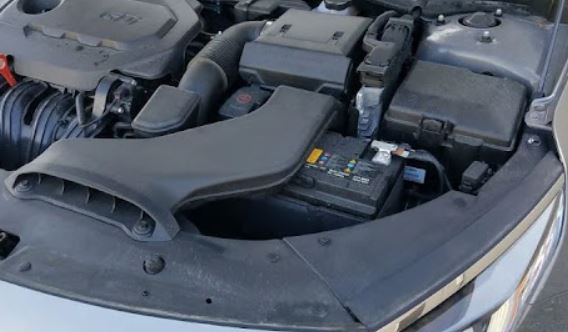
There’s a particular kind of dread that comes with turning your key—or pressing that start button—and hearing nothing but a weak, hesitant click. Most drivers treat this as a sudden, unexpected failure, but I can tell you from thousands of hours spent with my hands in engine bays that a dying 12V battery almost never fails without warning. It whispers before it screams. The problem is that modern cars have gotten so good at masking early symptoms that by the time most people notice something’s wrong, they’re already standing in a parking lot at 6 AM waiting for a jump start. Today I want to walk you through exactly what I look for when I suspect a battery is on its way out, the subtle signs that precede total failure, and how to avoid getting stranded before it happens to you.
The Slow Crank – Your Battery’s First Cry for Help
The single most reliable early warning sign is what we call a “slow crank” in the shop. This is that split-second hesitation before the engine catches—the starter motor turning over noticeably slower than it should, almost like the car is groggy and doesn’t want to wake up. When I hoist a car up on the lift after a customer complains of this, I’m almost never surprised to find the battery testing below 70% of its rated cold cranking amps (CCA is essentially a measurement of how much power a battery can deliver in cold temperatures to start your engine).
Many drivers overlook this, but from a mechanic’s perspective, the real critical point is that a slow crank on a warm day is far more concerning than one on a cold morning. Cold weather naturally thickens engine oil and reduces chemical reaction speed inside the battery, so some sluggishness in winter is expected and not necessarily alarming. But if your car is cranking slowly in the middle of July, that battery is genuinely failing internally, not just struggling with temperature. I’ve had customers dismiss this symptom for weeks because “it always starts eventually,” not realizing that every slow crank puts additional strain on the starter motor and alternator, potentially turning a $150 battery replacement into a $600 repair bill involving multiple components.
Electrical Gremlins – The Symptoms That Have Nothing to Do With Starting
Here’s something that surprises a lot of drivers: a failing battery often announces itself through problems that have nothing to do with starting the car at all. What would you do if your dashboard lights suddenly dimmed while idling at a red light, or your power windows started rolling up noticeably slower than usual? Most people assume these are separate, unrelated electrical issues. In my experience, it’s vital to understand that your battery isn’t just responsible for starting the engine—it’s the buffer and stabilizer for your entire electrical system, even after the alternator takes over.
Just last week, a client brought in a Honda Civic complaining that her radio kept resetting itself and her interior lights flickered whenever she used the AC on high. She’d already spent money at another shop replacing a fuse, assuming it was an isolated issue. When I tested her battery, it was holding a charge but failing badly under load—meaning it looked fine sitting still, but the moment real electrical demand hit it, it couldn’t keep up. This kind of intermittent flickering, dimming, or accessory resetting is a textbook sign of a battery losing its internal capacity, even when a basic voltage check might still show numbers that look “acceptable” at rest.
Physical Clues Under the Hood You Can Check Yourself
Beyond how the car behaves, there are physical signs I always check that most drivers never think to look at. Pop your hood and actually look at the battery casing itself. A healthy battery case should be flat and firm on all sides. If you notice any swelling or bulging, particularly on the sides, that battery is done—full stop. This swelling happens because internal chemical reactions produce gas that has nowhere to escape, and it’s often a sign of overcharging, extreme heat exposure, or the battery simply reaching the end of its usable chemical life. Driving on a swollen battery isn’t just an inconvenience waiting to happen; in rare but serious cases, it can crack and leak corrosive sulfuric acid onto other engine components.
Then there’s the corrosion around the terminals—that chalky, bluish-white or greenish crust that builds up where the cables connect to the battery posts. Back when I was an apprentice mechanic, one of the biggest trial-and-error mistakes I made was assuming that cleaning off corrosion always fixed a “battery problem.” Sometimes it does, since heavy corrosion can genuinely prevent proper electrical contact and mimic the symptoms of a dying battery. But I learned quickly that corrosion is often a symptom, not the root cause—it frequently indicates the battery itself is venting hydrogen gas excessively, which points to internal breakdown rather than a simple cleaning fix. Now, whenever I see heavy terminal corrosion, I always follow up with a proper load test rather than just cleaning it and sending the customer on their way.
[Mechanic’s Essential Checklist: Signs Your Battery Needs Attention]
| Warning Sign | What’s Actually Happening | Urgency Level |
|---|---|---|
| Slow engine crank | Reduced cold cranking amps, internal plate degradation | Moderate – test within days |
| Dimming lights/flickering accessories | Battery failing under electrical load | Moderate – test soon |
| Swollen or bulging case | Internal gas buildup, chemical breakdown | High – replace immediately |
| Heavy terminal corrosion | Hydrogen venting, possible internal fault | Moderate – clean and test |
| Battery warning light on dash | Voltage regulation issue, possibly battery or alternator | High – diagnose immediately |
| Rotten egg smell near battery | Sulfuric acid leak or overcharging | High – replace immediately |
| Car sits 2+ days and won’t start | Parasitic drain or battery can’t hold charge | Moderate – test both battery and drain |
How Long Should a Battery Actually Last, and When Is a Quote Fair?
One of the most common questions I get is simply, “How long should this have lasted?” In my experience, a quality battery in a moderate climate should reliably last 4 to 5 years. In regions with extreme summer heat, that lifespan often drops to 3 to 4 years, since heat is genuinely harder on batteries than cold—it accelerates the internal chemical reactions that eventually degrade the plates. If your battery is failing before the 3-year mark, something else is likely going on, such as a parasitic drain (something in your car continuing to pull power after you’ve turned it off and walked away) or a charging system that’s overcharging and cooking the battery prematurely.
As for cost, a standard replacement battery for most sedans typically runs $120 to $200 for the part itself, with installation often free or under $20 at most parts stores since it’s genuinely a simple job. If you’re being quoted $300 or more for a basic battery swap on a standard vehicle without any unusual complexity, that’s worth questioning. That said, some vehicles—particularly certain European models and hybrids—use AGM batteries (Absorbent Glass Mat batteries, which are more advanced, spill-proof, and better suited for cars with heavy electrical demands like stop-start systems) that legitimately cost more, sometimes $200 to $350, and may require a battery registration process afterward so the car’s computer recognizes the new battery correctly.
[Battery Type Cost & Lifespan Comparison]
| Battery Type | Typical Lifespan | Average Cost Range | Common Use |
|---|---|---|---|
| Standard Flooded Lead-Acid | 3-5 years | $100-$180 | Most older sedans, budget vehicles |
| AGM (Absorbent Glass Mat) | 4-6 years | $200-$350 | Vehicles with stop-start systems, luxury models |
| Enhanced Flooded Battery (EFB) | 4-5 years | $150-$220 | Newer mid-range vehicles with mild stop-start |
What I Want You to Actually Do This Weekend
If any of what I’ve described sounds familiar, don’t wait for the morning your car simply refuses to start. Pop your hood this weekend and take two minutes to visually inspect the case for swelling and the terminals for corrosion. Most auto parts stores will run a free load test on your battery in under five minutes—there’s genuinely no reason to guess when you can get real data. Pay attention to how your car cranks over the next few starts, particularly on a warm day when temperature isn’t a factor you can blame. And if you’re someone who drives infrequently, be aware that batteries degrade faster from sitting unused than from regular driving, so a car parked for a week or more deserves an occasional check.
A battery rarely dies without trying to tell you first. Listening to those early signals—the slow crank, the flickering dash lights, the corrosion creeping up the terminal post—is the difference between a routine $150 replacement on your own schedule and an emergency tow bill on a morning you can least afford it.
Leave a Reply