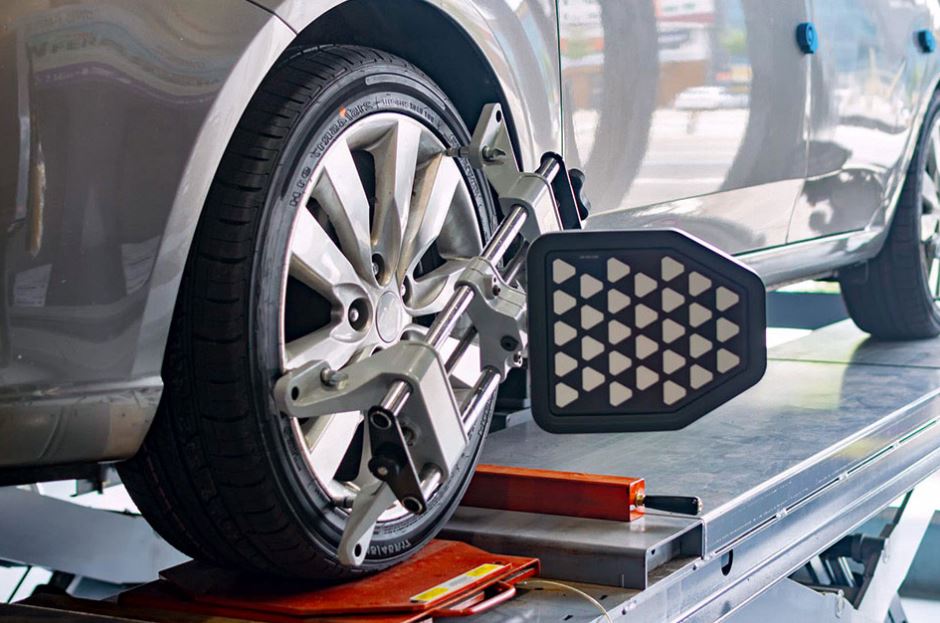
A retired schoolteacher drove her Subaru Outback into my shop a few weeks back, apologizing before she even got out of the car. “I know this sounds crazy,” she said, “but I feel like my car is trying to tell me something.” She described a faint hum that turned into a buzz around 60 miles an hour, one that traveled up through the floor and into her feet. She’d already been to a quick-lube place that checked her oil, topped off her fluids, and sent her on her way with a clean bill of health. Nobody had touched her wheels. Twenty minutes on my balancer later, I found her rear passenger wheel was off by nearly two ounces. That’s not a small discrepancy — that’s enough imbalance to cause real, measurable wear over time, and it’s exactly the kind of thing that gets missed when nobody thinks to look.
The Physics Nobody Explains to You in Plain English
Let’s talk about what’s actually happening when a wheel spins down the highway, because once you understand the mechanics, you’ll never skip a balance service again. Every wheel and tire assembly, no matter how well manufactured, has slightly uneven weight distribution around its circumference. Maybe the rubber compound is a hair thicker on one side, maybe the wheel casting has a marginally denser section — these are manufacturing realities, not defects. At low speed, this doesn’t matter. But once you’re rolling at 60 or 70 miles an hour, that wheel is completing somewhere around 800 to 900 rotations per minute, and even a small weight discrepancy creates centrifugal force that translates into vibration you can feel.
Balancing corrects this by placing small counterweights (precisely calibrated clip-on or adhesive weights measured in fractions of an ounce) at the exact point needed to even out the rotation. When I spin a wheel on my balancing machine, it’s measuring imbalance in two planes — inner and outer — because a wheel can be balanced statically but still wobble dynamically if the weight distribution isn’t correct front-to-back across the rim’s width. That’s the difference between an amateur tire shop eyeballing it and a machine giving you exact gram measurements.
What would you do if you felt a subtle vibration but your last mechanic told you “everything looks fine”? In my experience, this happens because a lot of quick-service shops simply don’t check balance unless you specifically ask, or unless you’re getting new tires installed. It’s not that they’re being dishonest — it’s just not part of a standard oil change inspection. You have to ask for it directly.
What Happens When You Ignore It — The Slow, Expensive Damage
Here’s the part that really matters, and it’s the piece most drivers never connect. An out-of-balance wheel isn’t just uncomfortable to ride in. It’s actively accelerating wear on parts that are far more expensive to replace than a $20 balance service. When a wheel hops slightly with every rotation instead of maintaining smooth, even contact with the pavement, that repeated micro-impact travels straight into your wheel bearing (the sealed unit that lets the wheel spin freely while carrying the vehicle’s weight), your strut mounts, and your control arm bushings.
Many drivers overlook this, but from a mechanic’s perspective, the real critical point is that this kind of wear is cumulative and silent. It doesn’t announce itself with a warning light. It just slowly chews away at components until one day you’re hearing a growl or a clunk that seemingly came out of nowhere. When I hoist a car up on the lift after months of ignored vibration, I’m typically finding tires with a cupped, scalloped wear pattern — you can literally feel the wave pattern with your palm — plus early play developing in the wheel bearing when I grab the tire at twelve and six o’clock and rock it.
Back when I was an apprentice mechanic, one of the biggest trial-and-error mistakes I made was underselling the importance of balance to customers who came in with “just a little shake.” I treated it as cosmetic, something you could put off. It took watching a customer’s minor vibration turn into a $340 strut mount replacement over the course of a year for me to understand that balance isn’t a comfort feature — it’s preventative maintenance in the truest sense.
The Warning Signs You’re Probably Dismissing Right Now
Most drivers experience the early stages of wheel imbalance and explain it away. That faint buzz at highway speed gets blamed on “road texture.” The slight wheel shake gets chalked up to “this car’s always been like that.” I want to walk you through what these symptoms actually mean, because recognizing them early is the difference between a cheap fix and an expensive one.
A vibration that shows up specifically in the steering wheel points to a front wheel imbalance, since vibration transmits most directly through the steering column and front suspension. If you feel it more in the seat cushion or through the floor near your feet, that’s typically a rear wheel issue. Pay attention also to the speed range — classic imbalance vibration tends to appear or intensify somewhere between 50 and 70 miles per hour and often smooths out or changes character above that range, which is a different signature than, say, a bent rim, which tends to worsen consistently as speed increases.
Mechanic’s Essential Checklist: Wheel Balance Symptoms & Response
| Symptom | Likely Cause | What to Do | Typical Cost |
|---|---|---|---|
| Vibration in steering wheel, 50–70 mph | Front wheel imbalance | Balance front wheels | $15–$25 per wheel |
| Vibration in seat or floor | Rear wheel imbalance | Balance rear wheels | $15–$25 per wheel |
| Faint hum or buzz building with speed | Early-stage imbalance | Balance before it worsens | $40–$80 full set |
| Vibration worsens consistently at all speeds | Possible bent rim, not imbalance | Have wheel inspected for damage | $80–$300 rim repair/replace |
| Recently hit a pothole or curb | Weight loss or wheel deformation | Rebalance and inspect wheel | $60–$100 inspection |
| New tires just installed | Fresh mount requires calibrated balancing | Confirm balance was performed | Usually included in mount fee |
| Cupped, wavy tread wear felt by hand | Long-term unresolved imbalance | Balance plus check suspension components | $60 balance + possible repair |
How This Ties Into Your Wallet, Not Just Your Comfort
I know it’s tempting to think of a vibrating wheel as an annoyance you can just live with, especially if money’s tight. But I’d encourage you to think about it as compound interest working against you. A $20 balance job today prevents accelerated tire wear that would otherwise force you into replacing tires two or three years early. It prevents premature wheel bearing wear that runs $250 to $400 per corner to fix. It reduces unnecessary strain on your struts and bushings, pushing off a suspension repair that could easily run into four figures if multiple components fail around the same time.
I always tell customers that balance service is one of the best return-on-investment maintenance items in the entire industry. There’s genuinely no other $20 to $40 service that protects this many downstream components simultaneously.
My Final Verdict From the Garage Floor
A shaking wheel is your car’s way of flagging a problem before it becomes serious, and ignoring it doesn’t make it go away — it just moves the cost from your wallet today into a much bigger bill down the road. If you’ve noticed any vibration, hum, or buzz that builds with speed, don’t dismiss it as “just how the car feels.”
Here’s what I want you to do this week. Pay attention to exactly where you feel the vibration, steering wheel versus seat, since that tells your mechanic which end of the car to check first. Ask specifically for a wheel balance any time you get tires rotated or replaced, and don’t assume it’s automatically included unless the shop confirms it. If you’ve hit a significant pothole or curbed a wheel recently, get it checked within a week rather than waiting for symptoms to worsen. And if a shop tells you everything’s fine without actually spinning your wheels on a balancer, that’s worth a second opinion, because you can’t diagnose an imbalance by sight alone — it has to be measured.
Leave a Reply