I still remember the sound. It was a Wednesday afternoon, and a woman in her late thirties pulled her 2014 Honda Accord into my bay because the car was “shuddering weird” every time she came to a stop. When I popped the hood and pulled the transmission dipstick — yes, some of these older automatics still have one — the fluid that came off the rag wasn’t the cherry-red color it should have been. It was the color of burnt coffee grounds, and it smelled like scorched popcorn. That smell is something you never forget once you’ve experienced it in a shop for ten years. It’s the smell of a transmission that is dying slowly, one shift at a time, because nobody ever changed the fluid.
Here’s the uncomfortable truth I tell every customer who asks me this question: transmission oil, whether it’s ATF (Automatic Transmission Fluid) for automatics or gear oil for manuals, is arguably the most neglected fluid in the entire vehicle. Everybody remembers their oil change. Most people remember to rotate their tires. But transmission fluid? It sits there quietly doing one of the hardest jobs in your car — lubricating, cooling, and providing hydraulic pressure to shift dozens of moving gears and clutch packs — and it gets almost zero attention until the transmission itself is already in trouble.
Why Transmission Fluid Breaks Down Faster Than You Think
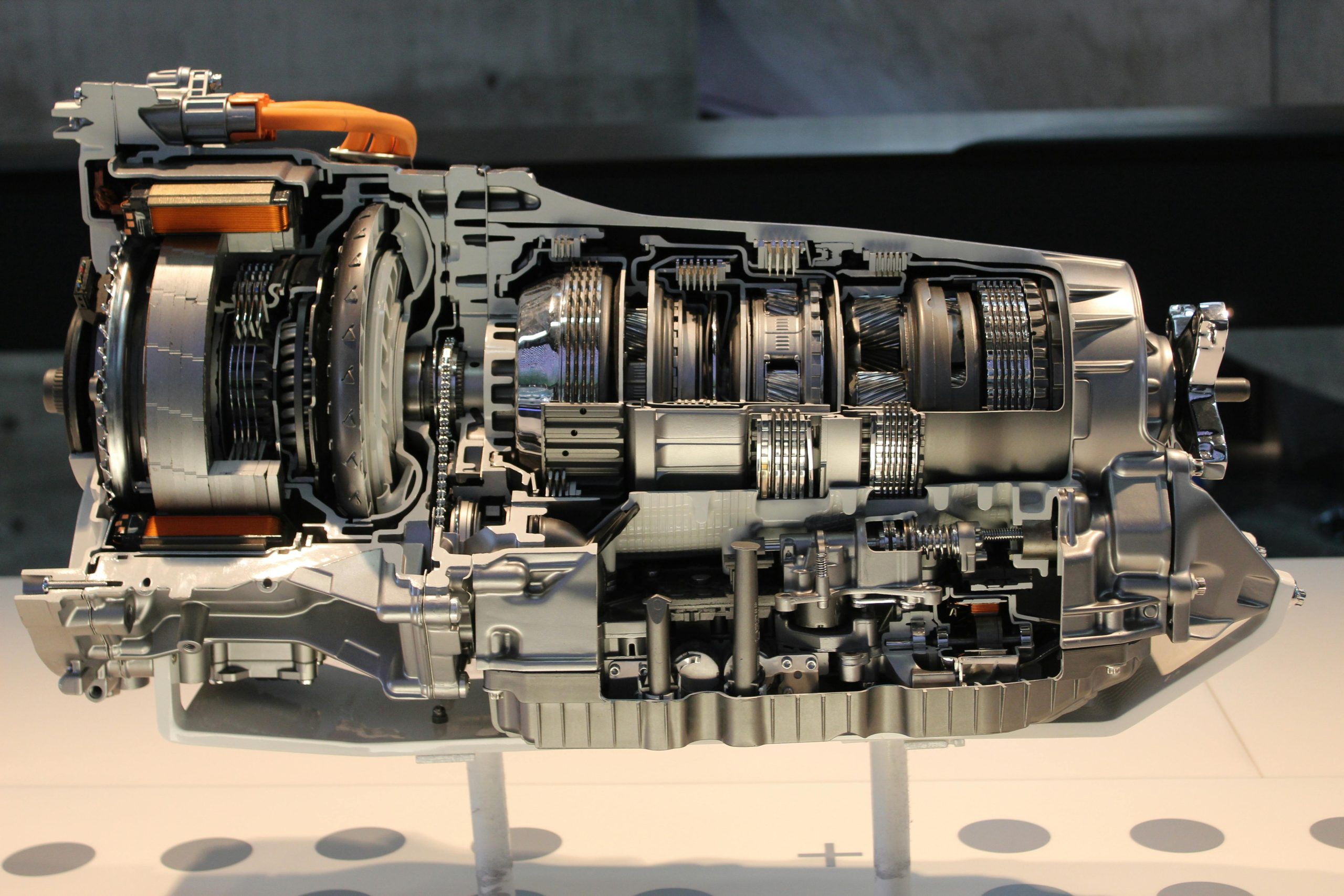
Let’s talk about what’s actually happening inside that transmission case. Unlike engine oil, which mainly has to worry about combustion byproducts and heat from the cylinders, transmission fluid is under constant, brutal hydraulic pressure. It’s being forced through tiny valve bodies and solenoids at high pressure to engage clutch packs that are essentially spinning discs rubbing against each other in a bath of fluid. Every single shift generates friction, heat, and microscopic metal shavings from the clutch material wearing down.
When I hoist a car up on the lift and drop the transmission pan on a vehicle that’s never had a service, this is usually what I see: a pan magnet coated in a thick, felt-like layer of metallic sludge. That’s not normal wear-and-tear residue — that’s your transmission literally eating itself from the inside, and the fluid that’s supposed to be washing that debris away and keeping things cool has instead turned into an abrasive paste that accelerates the damage.
Here’s something most drivers don’t know: transmission fluid doesn’t just lubricate, it’s also the hydraulic medium that tells your transmission when to shift. There are friction modifiers in that fluid engineered specifically to allow clutch packs to grip smoothly instead of grabbing harshly. Once those additives break down from heat cycling — which typically starts happening seriously after 60,000 to 80,000 miles depending on your driving style — your shifts start to feel clunky, hesitant, or delayed. That’s not a “check engine light” kind of problem. That’s a “this is going to cost you $3,000 to $5,000 in six months if you ignore it” kind of problem.
What would you do if your car suddenly hesitated for a second and a half before dropping into gear at a red light? Most drivers just shrug it off as “the car being weird today.” I’m telling you right now — that hesitation is your transmission begging for a fluid service.
The Manual vs. Automatic Difference (And Why CVTs Are a Different Animal Entirely)
I want to clear up some confusion here because I get asked about this constantly. Manual transmissions use gear oil, which is thicker and more chemically stable, so intervals tend to be longer — often 60,000 miles is reasonable for a manual gearbox under normal driving. Automatics, especially older four and six-speed units, generally need attention every 30,000 to 60,000 miles, though this varies a lot by manufacturer.
But CVTs (Continuously Variable Transmissions, which use a belt and pulley system instead of traditional gears) are where I see the most heartbreak. CVT fluid is a highly specialized formulation, and using the wrong fluid — even something that looks similar on the shelf — can destroy the belt or the pulley surfaces within a matter of months. I had an apprentice mistake early in my career where I nearly used a generic ATF on a CVT-equipped Nissan because the shop hadn’t restocked the correct Nissan NS-3 fluid yet. My senior mechanic at the time caught it before I finished the job, and he sat me down and explained exactly why that mistake could’ve cost the customer their entire transmission. I never forgot that lesson, and to this day I triple-check fluid specifications on every CVT that comes through my bay.
If you drive a CVT vehicle — common in a lot of Nissan, Subaru, and Honda models — do not let a quick-lube place put “universal ATF” in your car. Insist on the manufacturer-specified fluid. This single detail is the difference between a transmission lasting 200,000 miles or failing at 90,000.
Real Signs Your Transmission Fluid Needs Attention Right Now
Let me walk you through what I actually check for on the shop floor, because these are things a lot of online articles gloss over.
First, the smell test. Fresh ATF has a faint, slightly sweet petroleum smell. Burnt fluid smells sharp and acrid, almost like an electrical fire mixed with scorched rubber. If you can smell that on the dipstick, you’re already past due.
Second, the color and clarity. Healthy fluid is translucent red or pink. If it’s dark brown, black, or has visible metal flecks suspended in it when you hold it up to light, that’s degraded fluid doing more harm than good at this point.
Third — and this is the one most drivers actually notice first — is shift behavior. Delayed engagement when shifting from park to drive, a noticeable “clunk” or “shudder” during gear changes, or slipping (where the RPMs rise but the car doesn’t accelerate proportionally) are all classic symptoms of fluid that’s lost its friction properties.
Just last month, a customer brought in a Toyota Camry with about 95,000 miles on it, complaining about a shudder specifically between 35 and 45 mph. That’s a very particular RPM range, and in my experience, it’s almost always the torque converter lockup clutch struggling because of degraded fluid. We did a full fluid exchange — not just a drain and fill, but a proper machine-assisted exchange that replaces closer to 100% of the old fluid instead of the roughly 40-50% you get from a basic pan drop — and the shudder was gone within the first ten miles of the test drive. That customer avoided what could’ve easily become a $4,000 transmission rebuild.
Mechanic’s Essential Checklist: Transmission Fluid Service Reference
| Transmission Type | Recommended Service Interval | Average Cost (Parts & Labor) | Warning Signs to Watch For |
|---|---|---|---|
| Manual Gearbox | Every 60,000 miles | $120 – $200 | Grinding gears, notchy shifts, whining noise |
| Standard Automatic (4-6 speed) | Every 30,000 – 60,000 miles | $150 – $350 (pan drop) / $200 – $400 (fluid exchange) | Delayed engagement, harsh shifts, slipping |
| CVT | Every 25,000 – 40,000 miles (check manufacturer specs) | $200 – $450 (must use OEM-spec fluid) | Whining/droning noise, hesitation on acceleration |
| High-Mileage Neglected Unit (100k+, never serviced) | Do NOT do a full fluid exchange — consult a mechanic first | Varies significantly | Consult a professional before servicing |
I want to flag that last row specifically because it trips people up. If your transmission has never been serviced and you’re past 100,000 miles, doing an aggressive full fluid flush can actually be risky. The old, thickened fluid may be the only thing keeping worn clutch packs gripping properly, and a sudden flush to fresh, thinner fluid can expose that wear and cause slipping that wasn’t there before. In cases like that, I usually recommend a partial drain-and-fill done twice over a couple months, gradually reintroducing fresh fluid rather than shocking the system all at once. This is exactly the kind of judgment call that separates an experienced technician from someone just following a flat-rate manual.
What a Fair Price Actually Looks Like (And How to Avoid Getting Overcharged)
I get asked a lot whether a shop’s quote is fair, so let me break down realistic numbers. A basic pan drop and filter change on a standard automatic should run somewhere between $150 and $350 depending on your region and whether the vehicle needs a new pan gasket. A full machine fluid exchange, which cycles fluid through the torque converter and cooling lines as well, typically runs $200 to $400. If someone quotes you $600 or more for a basic service on a common sedan, ask specifically what’s included — sometimes shops bundle unnecessary “flush treatments” or additive packages that aren’t doing anything a properly formulated fluid isn’t already doing.
My Professional Verdict
In my experience, it’s vital to treat transmission fluid with the same seriousness as engine oil, if not more, because transmission repairs are dramatically more expensive than engine repairs in most cases. A neglected transmission doesn’t just fail — it fails expensively, usually right when you can least afford it.
Here’s your actionable checklist before you close this article:
Check your owner’s manual for the manufacturer’s specific fluid type and interval — don’t rely on generic “lifetime fluid” claims, because in my experience almost nothing automotive is truly lifetime.
Smell and inspect your dipstick fluid if your vehicle has one, and if it’s dark or burnt-smelling, schedule a service this week, not next month.
If you drive a CVT, confirm with your service center that they’re using the exact OEM-spec fluid, not a generic substitute.
Pay attention to shift behavior — hesitation, shudder, or slipping are your car’s way of telling you something before it becomes a five-figure repair bill.
Your transmission doesn’t get a warning light in most vehicles. It just quietly wears down until one day it doesn’t shift at all. Don’t wait for that day.
Leave a Reply