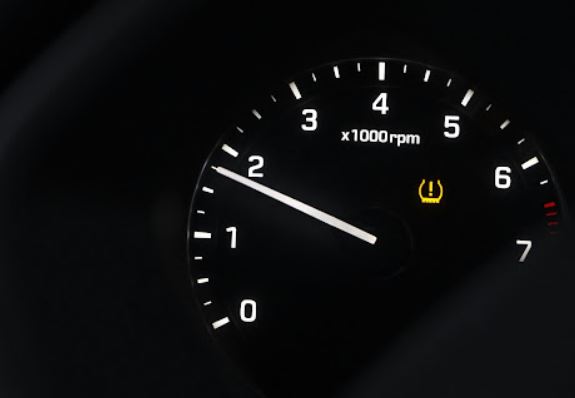
There’s a particular moment I see play out at my counter almost every week. A customer walks in a little flustered, points at their dashboard, and says something like, “This tire light came on out of nowhere, but all my tires look fine to me.” They’ve usually already done a visual walk-around of the car, kicked each tire like that tells them anything useful, and concluded the warning must be a glitch. I get it — a lit-up icon with no obvious explanation is unsettling, and when you’re not sure whether it means “pull over immediately” or “deal with it whenever,” most people just try to ignore it and hope it goes away. So let’s clear up exactly what your TPMS sensor is doing, why it lights up when it does, and how to handle it without getting overcharged or brushed off.
What a TPMS Sensor Actually Is and Why Your Car Has One
TPMS stands for Tire Pressure Monitoring System, and in the U.S. it’s been a federal requirement on all new passenger vehicles since 2007, following a wave of rollover accidents linked to under-inflated tires. Inside each of your wheels — usually attached to the valve stem or mounted on the wheel itself — sits a small battery-powered sensor that continuously measures the air pressure and, in most systems, the temperature inside that specific tire. That data gets transmitted wirelessly to a receiver module in your car, which compares it against the pressure range programmed for your vehicle and lights up the dashboard icon if something falls outside that window.
Many drivers overlook this, but from a mechanic’s perspective, the real critical point is understanding there are two fundamentally different types of TPMS systems, and knowing which one you have changes everything about how you diagnose a problem. Direct TPMS uses that physical sensor inside each wheel I just described, giving you an actual pressure reading for each individual tire. Indirect TPMS, on the other hand, doesn’t use pressure sensors at all — it uses your existing wheel speed sensors (the same ones your anti-lock braking system relies on) and detects pressure loss by noticing that an under-inflated tire has a very slightly smaller rolling diameter and therefore spins marginally faster than the others. When I hoist a car up on the lift, the first thing I check is which system I’m dealing with, because the diagnostic path and the repair cost are completely different depending on the answer.
The Warning Light Isn’t Always What You Think
Here’s something that trips up almost every customer who isn’t in the trade: the TPMS light illuminating doesn’t automatically mean a sensor is broken. In my experience, it’s vital to separate this into three distinct possibilities, because chasing the wrong one wastes both your time and your money.
The most common cause, by a wide margin, is simply low tire pressure from ordinary seasonal temperature swings. Tire pressure drops roughly 1 PSI for every 10-degree drop in outside temperature, so when the first real cold snap hits in autumn, my shop gets flooded with TPMS complaints that have nothing to do with a faulty sensor and everything to do with the weather. The second possibility is a genuine sensor malfunction — the battery inside has died, the sensor housing has cracked, or the internal circuitry has failed after years of vibration and heat cycling. The third, and the one people rarely consider, is a communication or programming issue, where the sensor itself is working fine but the vehicle’s receiver module has lost its pairing with one or more sensors, often after a tire rotation or a battery replacement that wasn’t handled correctly.
What would you do if your TPMS light came on steady rather than blinking? I’d tell you to treat that as a straightforward instruction: check your actual tire pressure with a manual gauge as soon as it’s convenient, because a steady light almost always just means one or more tires has drifted below the threshold. But if that light is flashing for about a minute every time you start the car and then stays illuminated, that’s the system telling you it can’t get a reliable reading from at least one sensor, which points toward a sensor or battery failure rather than simple air loss. That distinction alone saves my customers from paying for a diagnostic they didn’t need.
The Anatomy of Sensor Failure and What It Actually Costs
TPMS sensors run on small, sealed, non-replaceable lithium batteries, and that’s the single biggest thing people don’t understand about them. You can’t just swap a battery like you would in a key fob — when the battery dies, which typically happens somewhere between 5 and 10 years depending on usage and how often the sensor is transmitting, the entire sensor unit has to be replaced. I’ve pulled dead sensors out of wheels where the battery had essentially fused itself to the internal contacts after a decade of heat cycling in a tire that regularly hits 140 degrees on summer asphalt — that corrosion has a very specific chalky, greenish texture that tells me immediately I’m not dealing with a simple reprogramming issue.
Just last week, a client brought in a Honda CR-V with all four TPMS lights cycling on and off intermittently, and she’d already been quoted a full four-sensor replacement by another shop for just under $600. When I actually tested each sensor individually with a diagnostic tool, three of the four were reading perfectly fine — the real issue was a single failed sensor on the rear passenger side, plus a rotation that had been done without reprogramming the system to recognize which sensor now lived in which wheel position. That mismatch was throwing intermittent faults across all four positions because the computer kept getting confused about which reading belonged to which tire. She left with one sensor replaced and a proper relearn procedure done, for closer to $140 total. That’s the kind of gap between a fair quote and an inflated one that I want every reader to be able to spot.
Realistic, fair pricing for a single direct TPMS sensor replacement typically runs between $50 and $120 for the part itself, depending on your vehicle’s make and whether it’s an OEM or quality aftermarket unit, plus somewhere around $20 to $40 in labor since the tire has to be broken down from the wheel to access it in most designs. If a shop is quoting you $150 or more per sensor with labor included, it’s not unreasonable to ask for a breakdown of parts versus labor before agreeing.
[Mechanic’s Essential TPMS Checklist]
| Situation | Likely Cause | Recommended Action | Fair Cost Estimate |
|---|---|---|---|
| Light comes on after a cold snap | Seasonal pressure drop | Check and adjust pressure manually | Free (DIY) |
| Light flashes 60-90 sec at startup, then stays on | Sensor communication failure | Diagnostic scan to identify faulty sensor | $30-$60 for diagnostic |
| Light stays on after a tire rotation | System not relearned to new positions | Relearn/reset procedure | $20-$50 |
| Sensor battery dead (5-10 yr old vehicle) | Non-replaceable battery expired | Full sensor replacement | $70-$160 per sensor, installed |
| Light on despite tires visibly full | Sensor corrosion or physical damage | Individual sensor testing before replacing all | $30-$60 diagnostic first |
Why the Relearn Procedure Matters More Than People Realize
This is a step I see skipped constantly, and it’s one of the biggest sources of comeback complaints in the TPMS world. Every time tires are rotated, replaced, or a sensor is swapped, the vehicle’s receiver module needs to go through what’s called a “relearn” procedure — essentially re-teaching the car’s computer which specific sensor ID corresponds to which wheel position (front-left, front-right, rear-left, rear-right). Some vehicles handle this automatically after a short drive at a certain speed, others require a stationary relearn using a specific button sequence with the ignition on, and some genuinely need a dedicated TPMS tool to trigger and confirm the process.
Back when I was an apprentice mechanic, one of the biggest trial-and-error mistakes I made was assuming every vehicle used the same relearn method. I once sent a customer home after a routine rotation, confident the system would auto-relearn within a few miles like the last several cars I’d worked on, only to have her call two days later confused about why her TPMS light was showing the wrong tire as low. That particular vehicle needed a manual stationary relearn that I’d simply skipped. It was a humbling lesson, and now checking the specific relearn procedure for the exact make and model is a non-negotiable step in my process, every single time, regardless of how many times I’ve done that particular job before.
If you’ve recently had tires rotated or replaced at a shop and your TPMS light is behaving strangely, don’t assume you need a new sensor before confirming the relearn was actually performed. It’s a five-to-fifteen-minute procedure that costs you nothing if it’s done properly the first time, and I’d encourage you to specifically ask whoever services your tires whether they completed it.
My Final Verdict and What You Should Do Right Now
A TPMS light isn’t something to dismiss, but it also isn’t automatically a sign you need an expensive repair. Before you assume the worst, grab a manual tire gauge — the small pencil-style ones cost about five dollars and are more reliable long-term than trusting the dashboard alone — and check all four tires plus your spare if it’s equipped with a sensor. Compare those numbers against the recommended PSI listed on the sticker inside your driver’s door jamb, not the number stamped on the tire’s sidewall. If everything checks out at the correct pressure and the light is still on, that’s your genuine signal to get a proper diagnostic scan rather than authorizing a blind sensor replacement.
Treat your TPMS system the way you’d treat any other early-warning system in your car: it exists to catch small problems before they become dangerous ones, particularly given how directly tire pressure affects your vehicle’s handling and stopping distance. Don’t let a shop replace parts you don’t need, and don’t ignore a light that’s trying to tell you something real. A five-minute pressure check today can save you both a breakdown on the highway and a repair bill you never should have paid.
Leave a Reply