The Ticking Time Bomb Under Your Hood That Nobody Explains Properly
Turbocharged engines are everywhere now. Automakers downsized displacement across the board and slapped a turbo on nearly everything to hit fuel economy targets while still keeping horsepower numbers respectable on the window sticker. Problem is, most drivers who bought into this shift have no idea they’re now driving something that behaves fundamentally differently under the hood compared to the naturally aspirated engines their parents drove. I see it constantly — someone rolls in with a turbocharged compact SUV or sedan, treats it exactly like grandma’s old naturally aspirated Camry, and within 60,000 to 80,000 miles they’re looking at a turbo replacement bill that can run anywhere from $1,500 to well over $3,000 depending on the platform. The frustrating part is that almost all of it was preventable. Today I want to walk you through what’s actually happening inside that turbo housing, why certain habits destroy it faster than people realize, and exactly what you need to do to get that component to last the life of the car instead of becoming a mid-life expense.
Understanding What’s Actually Spinning Under That Boost Pressure
Let’s start with what a turbocharger actually is, because I find most owners have a vague notion but not a real understanding. A turbocharger uses your engine’s exhaust gases to spin a turbine wheel, which is connected by a shaft to a compressor wheel on the intake side (this is the part that force-feeds extra air into your engine to make more power than the engine could produce on its own). That shaft is spinning at speeds that can exceed 150,000 to 200,000 RPM under load — for comparison, your engine’s crankshaft is doing maybe 6,000 to 7,000 RPM at redline. At that rotational speed, the shaft doesn’t ride on traditional ball bearings in most turbos; it floats on an incredibly thin film of pressurized oil, sometimes as thin as a few microns, called a “journal bearing” (a bearing surface lubricated purely by oil pressure rather than physical rolling elements).
When I hoist a car up on the lift and pull a failed turbo apart, this is usually what I see: the shaft has developed play you can feel just by wiggling it between your fingers, and there’s often a bluish discoloration on the housing from excessive heat. That discoloration tells me almost immediately that this turbo was starved of oil at some point, even if just for a few seconds. Many drivers overlook this, but from a mechanic’s perspective, the real critical point is that turbo failure is almost never a sudden, random event. It’s the cumulative result of small moments of oil starvation or oil degradation that slowly wear away at that bearing surface until one day it lets go entirely, sometimes taking metal debris and sending it straight into your engine’s intake tract or exhaust system.
The Habit That Kills More Turbos Than Anything Else
If I had to point to one single behavior that shortens turbo life more than any other, it’s shutting the engine off immediately after hard driving. Here’s the mechanism behind it, because understanding the “why” is what actually gets people to change the habit. When you’re driving hard — highway merging, climbing a grade, or just spirited acceleration — that turbo is spinning at extreme RPM and running very hot, sometimes with exhaust-side temperatures exceeding 1,700 degrees Fahrenheit. The oil that’s constantly flowing through the bearing housing is doing double duty: lubricating that spinning shaft and carrying heat away from it. The instant you shut the engine off, oil circulation stops immediately, but that turbo housing is still radiating enormous heat into whatever oil remains trapped inside it. That trapped oil essentially cooks and forms a hard, varnish-like carbon deposit inside the bearing housing — mechanics call this “coking” (the process of oil breaking down into carbon deposits from extreme heat without circulation). Once coking starts, it restricts oil flow to the bearing on future startups, and you’ve begun a slow death spiral for that turbo.
What would you do if you just got off the highway after a long drive and pulled straight into your driveway? Most people shut the car off right then and walk inside. In my professional opinion, that’s exactly the wrong move on a turbocharged vehicle. I tell every customer with a turbo car the same thing: after any period of sustained higher-RPM driving, give the engine 60 to 90 seconds of idle time before shutting it down. That idle period allows oil to keep circulating through the turbo bearing while the housing gradually sheds heat, preventing that coking process from ever starting. Some newer turbo vehicles actually have a turbo timer or an electric auxiliary oil pump that handles this automatically, but the vast majority of daily-driver turbo cars on the road today still rely entirely on driver discipline for this.
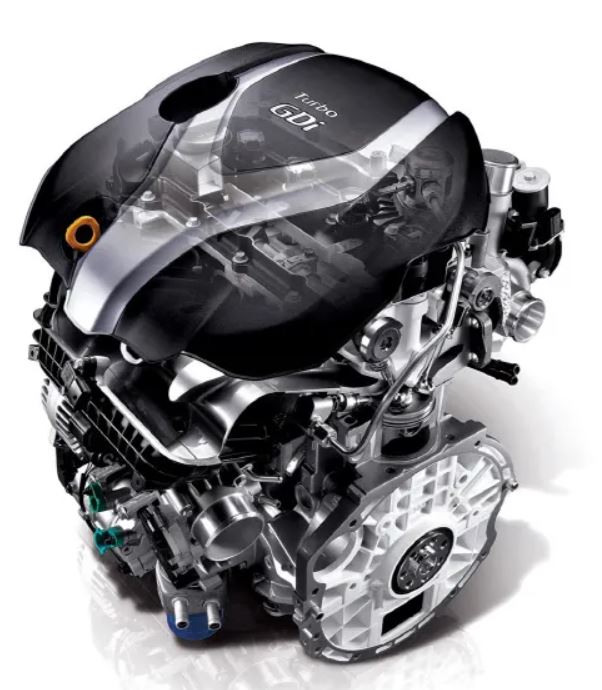
Just last week, a client brought in a Hyundai Elantra with the 1.6-liter turbo engine, and she was describing a whistling noise on acceleration along with a slight puff of blue-gray smoke on startup. When I pulled the intake piping off to inspect the turbo, I could physically spin the compressor wheel by hand and feel gritty resistance along with noticeable side-to-side play in the shaft — that play should be nearly imperceptible on a healthy turbo. Turns out she commuted 40 minutes on the highway every day and always shut the car off the second she parked. Classic coking failure pattern. We replaced the turbo, and the very first thing I did during the walkthrough afterward was teach her that 60-second cool-down habit, because otherwise she’d be back in my bay with the same problem in another two or three years.
Oil Quality and Change Intervals Matter More Than You Think
The second biggest factor I see contributing to premature turbo failure is oil neglect, and this ties directly into the bearing lubrication we just talked about. Turbocharged engines are far less forgiving of extended oil change intervals or cheap, low-quality oil than naturally aspirated engines are. That thin oil film supporting the turbo shaft depends entirely on oil that hasn’t broken down, hasn’t lost its viscosity stability, and is still carrying its detergent and anti-wear additive package effectively. Once oil starts to degrade past its useful life, it can no longer maintain that consistent film thickness under extreme heat and RPM, and you get metal-to-metal contact at a microscopic level every single time you drive.
In my experience, it’s vital to use a full synthetic oil that meets the manufacturer’s specific turbo-rated specification, and to stick to intervals no longer than 5,000 miles even if the manufacturer’s oil life monitor is telling you that you can push it to 7,500 or 10,000 miles. Those extended interval recommendations are often calculated assuming ideal driving conditions, and most people’s real-world driving — short trips, stop-and-go traffic, extreme temperatures — doesn’t match that ideal scenario. I’ve cut open oil filters from turbo vehicles at the 10,000-mile mark using extended synthetic oil, and the filter media already showed a noticeable amount of fine metallic sediment that simply shouldn’t be there yet.
[Mechanic’s Essential Checklist: Turbo Care & Maintenance Schedule]
| Maintenance Task | Recommended Interval | Why It Matters | Estimated Cost If Skipped |
|---|---|---|---|
| Full synthetic oil change | Every 5,000 mi | Maintains bearing lubrication film | Turbo failure: $1,500–$3,000+ |
| Post-drive idle cool-down | Every drive (60–90 sec) | Prevents oil coking in housing | Turbo failure: $1,500–$3,000+ |
| Air filter inspection | Every 10,000–12,000 mi | Prevents debris ingestion into compressor | Compressor wheel damage: $600–$1,200 |
| Boost hose/coupling check | Every 20,000 mi | Prevents boost leaks, overspin conditions | Reduced power, potential overspin failure |
| Warm-up before hard acceleration | Every cold start (1–2 min) | Allows oil pressure to stabilize first | Accelerated bearing wear over time |
I’d also add that cold starts deserve just as much respect as hot shutdowns. Many drivers overlook this, but from a mechanic’s perspective, the real critical point on startup is that oil pressure takes a few seconds to fully establish itself throughout the engine, including up at that turbo bearing housing sitting near the top of the engine. Flooring it within the first minute of a cold start, especially in winter, means you’re asking that turbo to spin at high RPM before it has adequate, properly-pressurized lubrication reaching it. Give it a minute or two of gentle driving before you lean into the throttle, and you’ll spare that bearing a lot of unnecessary stress over the life of the car.
Listening for the Early Warning Signs Before Failure Becomes Catastrophic
Turbos, much like differentials, tend to give you audible warnings well before they fail completely, and knowing what to listen for can save you from a catastrophic failure that damages your engine internals. A turbo in the early stages of bearing wear typically produces a distinct high-pitched whining or whistling sound during acceleration that rises and falls in pitch with engine RPM — some people describe it as sounding almost like a jet engine spooling up. That’s different from a boost leak, which tends to sound more like a hissing or a fluttering “psshhh” sound, usually most noticeable when you let off the throttle after accelerating.
If you start noticing blue-gray smoke from the exhaust specifically under acceleration or right after startup, that’s often oil making its way past worn turbo seals into the intake or exhaust tract and getting burned off. That’s a sign the bearing clearance has already opened up beyond a safe tolerance, and in my professional opinion, that turbo needs attention within days, not months. Continuing to drive on a turbo in that state risks it seizing entirely, and when a turbo seizes, it can send metal fragments downstream into the catalytic converter or, worse, back into the engine’s intake, turning a $1,500 turbo replacement into a $5,000-plus engine repair.
What You Should Actually Do This Week
If you own a turbocharged vehicle, I want you to walk away from this article with three concrete actions, not just vague awareness. First, check your maintenance records and confirm your oil changes have genuinely been happening every 5,000 miles with a full synthetic that meets your manufacturer’s turbo spec, not just whatever was cheapest at the last quick-lube shop. Second, start practicing that 60-to-90-second cool-down idle after any highway or hard-driving session, and give your engine a gentle minute before demanding hard acceleration on cold starts. Third, pay attention to any new whistling, whining, or smoke on acceleration, and get it checked immediately rather than waiting to see if it goes away on its own — it won’t. Turbochargers are remarkably durable components when they’re treated with the respect their operating conditions demand, but they’re equally unforgiving of neglect. A few small habit changes on your part is genuinely the difference between that turbo lasting the entire life of your vehicle or leaving you with a repair bill that could’ve bought you a decade of oil changes instead.
Leave a Reply