The Fluid Nobody Remembers Until It’s Too Late
Every week, at least one AWD owner rolls into my bay convinced they’ve done everything right. Regular oil changes, fresh brake pads, new tires when the tread got low — a genuinely well-maintained car on paper. Then I ask one simple question: “When’s the last time you changed your differential fluid?” More often than not, I get a blank stare. Some don’t even know their car has a differential fluid separate from the engine oil. And honestly, I don’t blame them — nobody tells you about it at the dealership, and it’s not exactly a line item that jumps out on a service reminder sticker. But here’s the thing: if you’re driving an all-wheel-drive vehicle and you’ve never touched that fluid, you’re sitting on a problem that grows more expensive with every mile you drive. Today I want to walk you through exactly why this matters, what actually happens inside that housing when the fluid breaks down, and what a fair repair looks like versus what’s a rip-off.
What Is Differential Fluid, and Why Does AWD Make It So Critical?
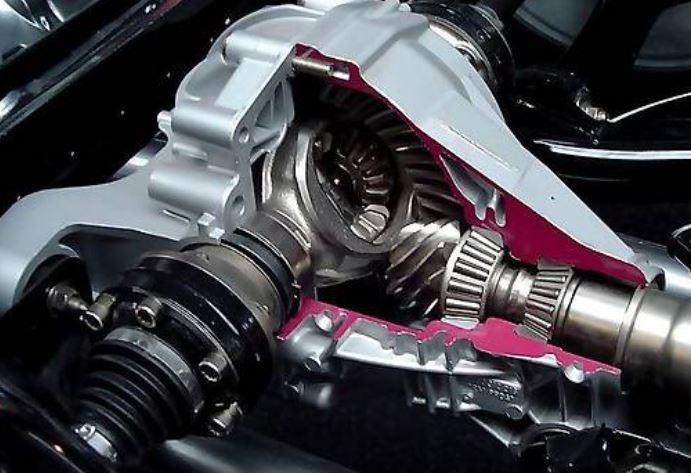
Let’s clear up the terminology first, because I know it trips people up. Your differential (a gear assembly that allows your wheels to spin at different speeds when turning, which is essential because your outer wheels travel a longer arc than your inner wheels) relies on a thick, specialized gear oil to keep its internal gears and bearings lubricated under extreme pressure. In a front-wheel-drive car, you’ve usually only got one differential to worry about, and it’s often bathed in the same fluid as your transmission. But AWD and 4WD vehicles are a different animal entirely. Depending on the drivetrain layout, you could be looking at a front differential, a rear differential, and a transfer case (the component that splits power between the front and rear axles) — each with its own separate fluid, its own service interval, and its own failure mode if neglected.
When I hoist a car up on the lift and pull the fill plug on a rear differential that’s never been serviced, I can tell you almost immediately how bad the neglect has been just by the smell and the color. Fresh gear oil has an amber, almost honey-like translucency and a distinct sulfur smell from the extreme-pressure additives. By the time it’s gone 80,000-plus miles without a change, it turns dark, gritty, and starts smelling faintly burnt — that’s from metal-on-metal contact grinding away at the gear teeth and depositing fine metallic particles into the fluid. Many drivers overlook this, but from a mechanic’s perspective, the real critical point is that differential fluid doesn’t just lubricate — it also acts as a heat transfer medium and a cushion against shock loading every time you accelerate hard or take a corner aggressively. Once that fluid degrades, you’re not just losing lubrication, you’re losing your gears’ ability to survive normal driving stress.
The Warning Signs Most Drivers Miss (Until It’s a $2,000 Problem)
This is where I really want you to pay attention, because differential failure rarely happens overnight. It whispers before it screams. What would you do if you suddenly heard a low, rhythmic whining sound coming from underneath the car that changes pitch with your speed, kind of like a airplane taking off in the distance? Most drivers just turn up the radio. From my experience, that whine is one of the earliest and most reliable indicators of degraded gear oil or worn ring-and-pinion gears (the main gear set inside the differential that transfers power from the driveshaft to the axle). If you catch it at that whining stage and get a fluid change done, you might avoid a rebuild entirely. But if you let it progress to a clunking noise on acceleration or deceleration — that rhythmic “clunk-clunk-clunk” especially noticeable in slow parking lot turns — you’re likely already dealing with worn spider gears or bearing play, and no fluid change in the world is going to fix that anymore.
I actually had a client bring in a Subaru Outback a few months back — great car, but the owner had put nearly 95,000 miles on it without ever touching the rear differential fluid. She mentioned an occasional whine on the highway that she’d been ignoring for months, chalking it up to road noise. By the time I got it on the lift, the fluid that came out looked almost like chocolate milk with metal flakes settled at the bottom of the drain pan. We caught it just in time — a fluid change and a magnetic drain plug cleanout solved it, total bill around $180. Had she waited another 10,000 miles, we were looking at a full differential rebuild or replacement, easily $1,800 to $2,500 depending on the parts availability for that specific AWD system. That’s the gap we’re talking about here: a $180 preventive service versus a $2,000+ repair, and the only difference is whether you acted on the early warning signs.
How Often Should You Actually Change It? (And Why Your Owner’s Manual Might Be Wrong)
Here’s something that might surprise you, and it’s a point I’ve gone back and forth with service advisors about for years. A lot of manufacturers list differential fluid as a “lifetime fill” or push the interval out to 100,000 miles or more in the owner’s manual. In my professional opinion, that number is written for ideal conditions — mild climates, no towing, no aggressive driving, no off-roading. It’s not written for the reality most people actually live in. If you’re doing any towing, frequent stop-and-go city driving, driving through deep snow or mud regularly, or you live somewhere with real seasonal temperature swings, that fluid is breaking down faster than the manual assumes.
My own rule of thumb, built from years of comparing fluid condition to actual mileage across hundreds of vehicles, looks something like this:
[Mechanic’s Essential Checklist: AWD/4WD Fluid Service Intervals]
| Component | Manufacturer’s Typical Interval | Real-World Recommended Interval | What Happens If Ignored |
|---|---|---|---|
| Front Differential | 60,000–100,000 mi | 30,000–45,000 mi | Whining noise, eventual gear pitting |
| Rear Differential | 60,000–100,000 mi | 30,000–45,000 mi | Metallic clunking, bearing failure |
| Transfer Case Fluid | 30,000–60,000 mi | 25,000–30,000 mi | Shuddering during turns, chain wear |
| AWD Coupling Fluid (if equipped) | Often unlisted | Every 30,000 mi | Loss of AWD engagement, overheating |
I want to be upfront that these numbers aren’t pulled from a textbook — they’re built from what I’ve personally seen come out of drain plugs at various mileage marks. Back when I was an apprentice mechanic, one of the biggest trial-and-error mistakes I made was trusting the manufacturer’s “lifetime fluid” label at face value on a customer’s Jeep Grand Cherokee. I told him he didn’t need a service, and about a year later he came back with a transfer case that was making a grinding noise on tight turns. That mistake taught me to always ask about driving habits and mileage patterns before quoting someone the manual’s default interval. Lesson learned the hard way, and it’s shaped how I advise every AWD owner since.
What a Fair Price Actually Looks Like (So You Don’t Get Overcharged)
This is the part I get asked about constantly, and honestly, it’s where a lot of shops take advantage of the fact that most drivers have no reference point. A straightforward differential fluid change — draining the old fluid, replacing the drain plug gasket, refilling with the correct gear oil — should realistically run you somewhere between $80 and $150 per differential at a reputable independent shop, parts and labor included. If you’ve got a transfer case that also needs service, tack on another $100 to $150. If a shop quotes you $400 or more just for a fluid change with no additional diagnostic work or parts replacement, that’s a red flag worth questioning. On the flip side, if you’re being quoted under $60, ask what fluid they’re actually using — some shops cut corners with generic gear oil instead of the specific viscosity and additive package your AWD system needs, which can actually accelerate wear rather than prevent it.
One more thing many drivers don’t realize: not all gear oil is interchangeable. Some AWD systems, particularly ones with limited-slip differentials (a mechanism that helps prevent one wheel from spinning uselessly when it loses traction), require special friction-modifier additives in the fluid. Using the wrong fluid in a limited-slip differential can cause a jerky, chattering feeling every time you make a slow, sharp turn — I’ve had customers come in convinced something was broken, when really the last shop just used the wrong fluid on their fill-up.
The Bottom Line and What You Should Do This Week
If there’s one thing I want you to walk away with, it’s this — AWD systems give you fantastic traction and confidence in bad weather, but that capability comes with maintenance obligations most drivers simply aren’t told about. The differential and transfer case fluids are working just as hard as your engine oil, arguably harder given the shock loads and heat they absorb, yet they get a fraction of the attention. Pull out your maintenance records this week and check when your differential fluid was last changed. If you genuinely don’t know, or if it’s been more than 30,000 to 40,000 miles, don’t wait for that telltale whine to show up on the highway. Get it inspected, get a fluid sample checked for metal contamination, and budget for that $80 to $150 service now rather than the $2,000 rebuild later. Your gears — and your wallet — will thank you.
Leave a Reply